

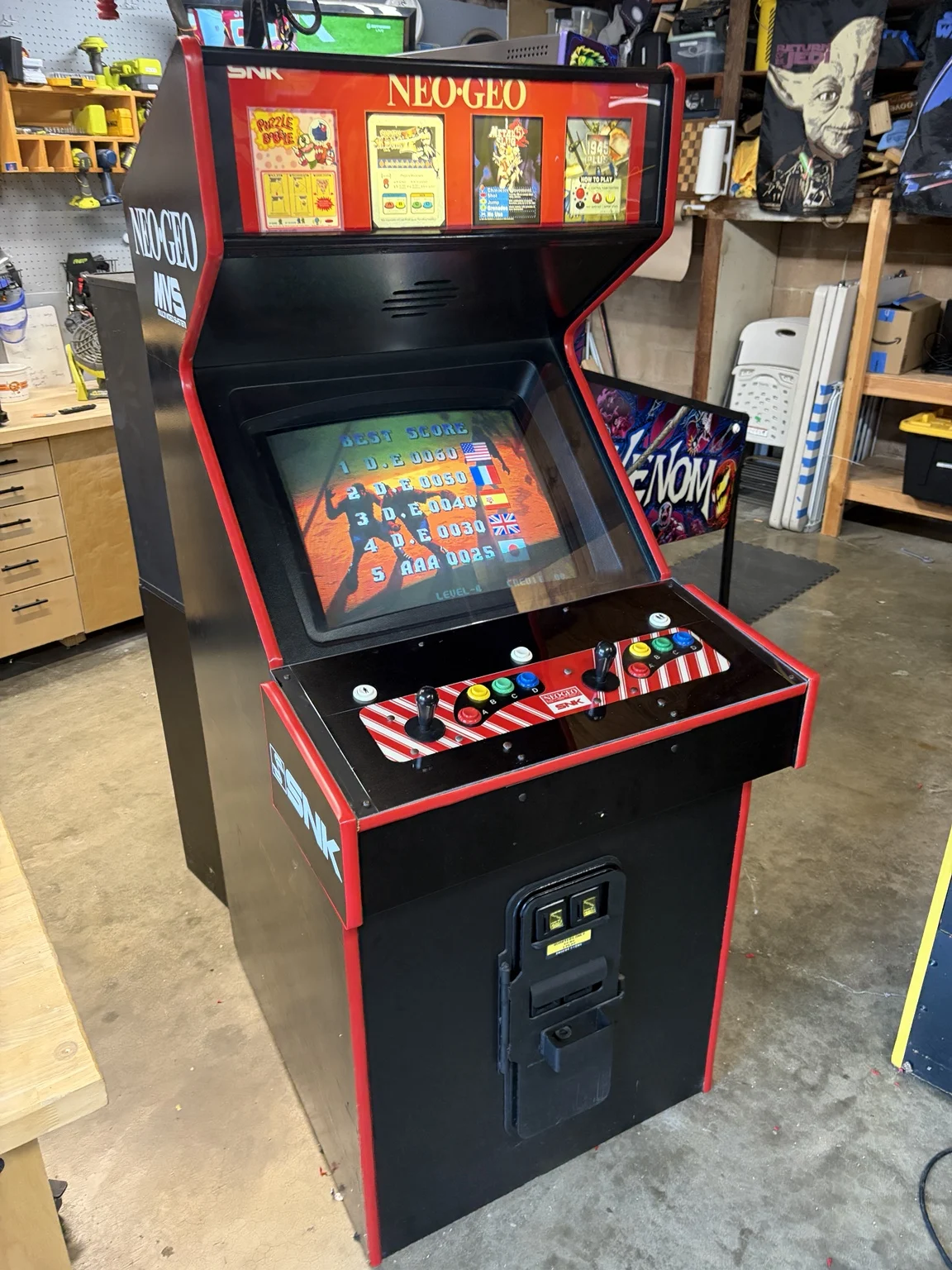
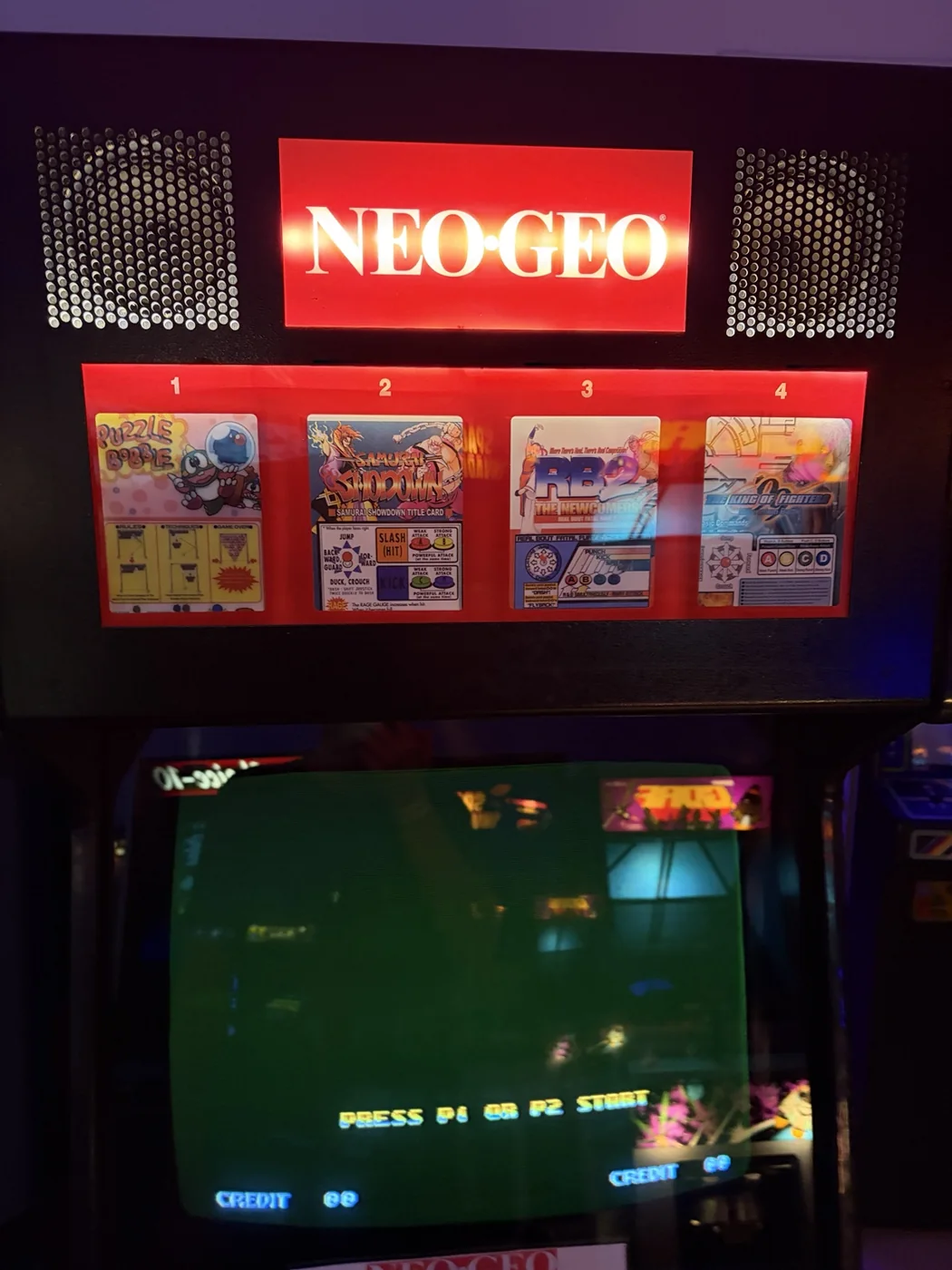
Look at the top of my Neo Geo. Instead of one enormous promise, there are four smaller ones.
A bubble puzzle. A sword fight. A Metal Slug adventure. A sky full of enemy aircraft. Before you even touch the joystick, the marquee tells you that this machine has options.
That is the appeal of the Neo Geo in one glance. You can walk up with a completely different mood from the last person who played, press a button, and find something for yourself. The same control panel becomes a battlefield, a puzzle board, or the beginning of a very competitive evening.
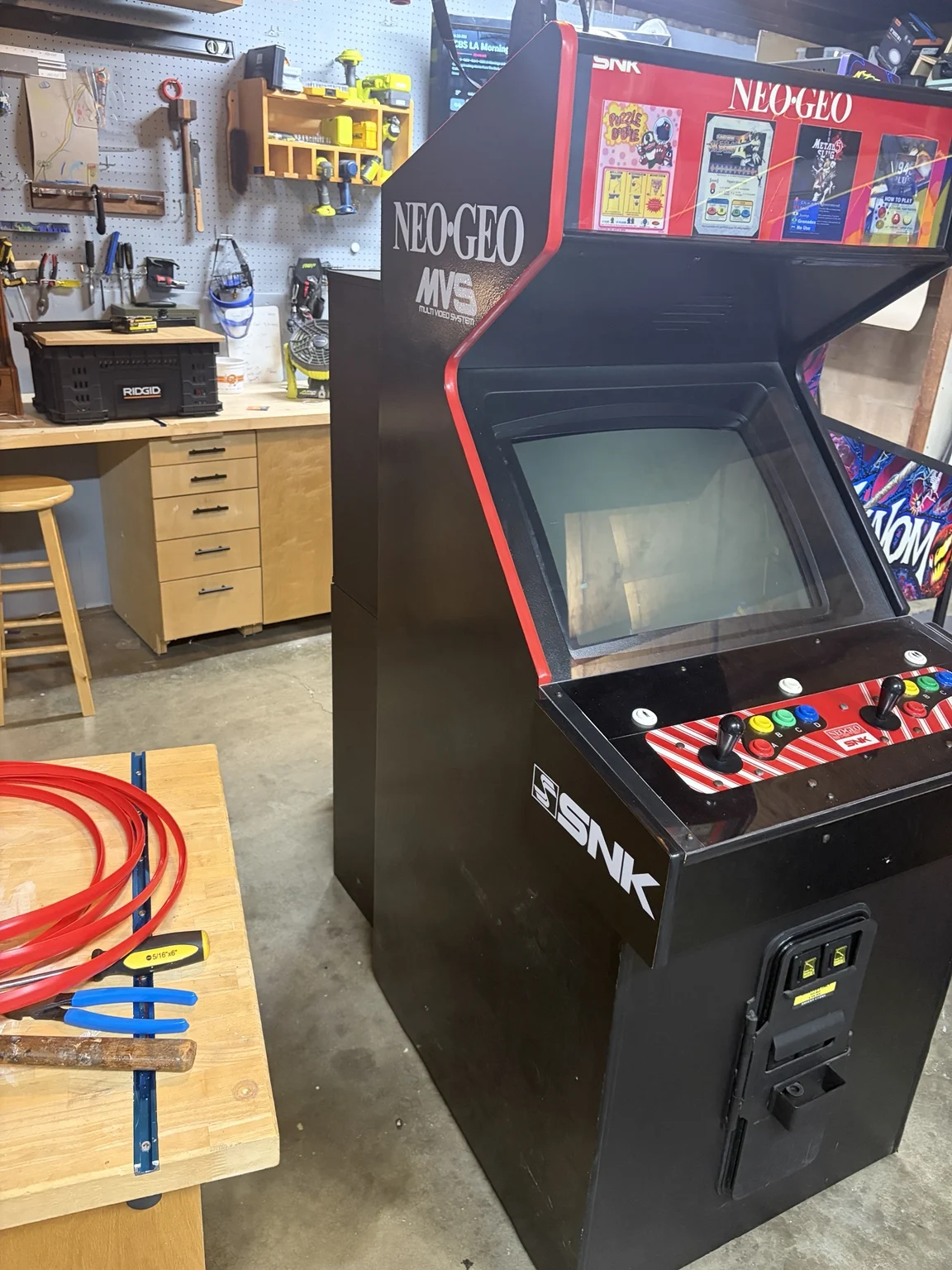
My cabinet is black, with a red marquee and those unmistakable red, yellow, green, and blue action buttons. It lives among tools and other machines in the garage, which feels appropriate. The Neo Geo was built to earn its place in a room by giving people a reason to keep coming back.
From the garage / October 4, 2026
New red T-molding, installed.
I installed new red T-molding on my black Neo Geo cabinet. The bright red trim ties the cabinet edges into the red marquee and striped control-panel artwork. It is a small cosmetic change that makes the whole machine look more put together.
01 / A better use of a corner
The brilliant part was the choice.
SNK’s Neo Geo arrived in 1990. Its arcade format was the Multi Video System, or MVS: a platform with interchangeable game cartridges, including multi-slot versions that offered several titles from one machine.[1]
For an operator, that meant more variety per square foot and a way to refresh the lineup without replacing an entire cabinet. SNK’s own history singles out the system’s cost and space advantages as major reasons it appealed to small businesses.[1]
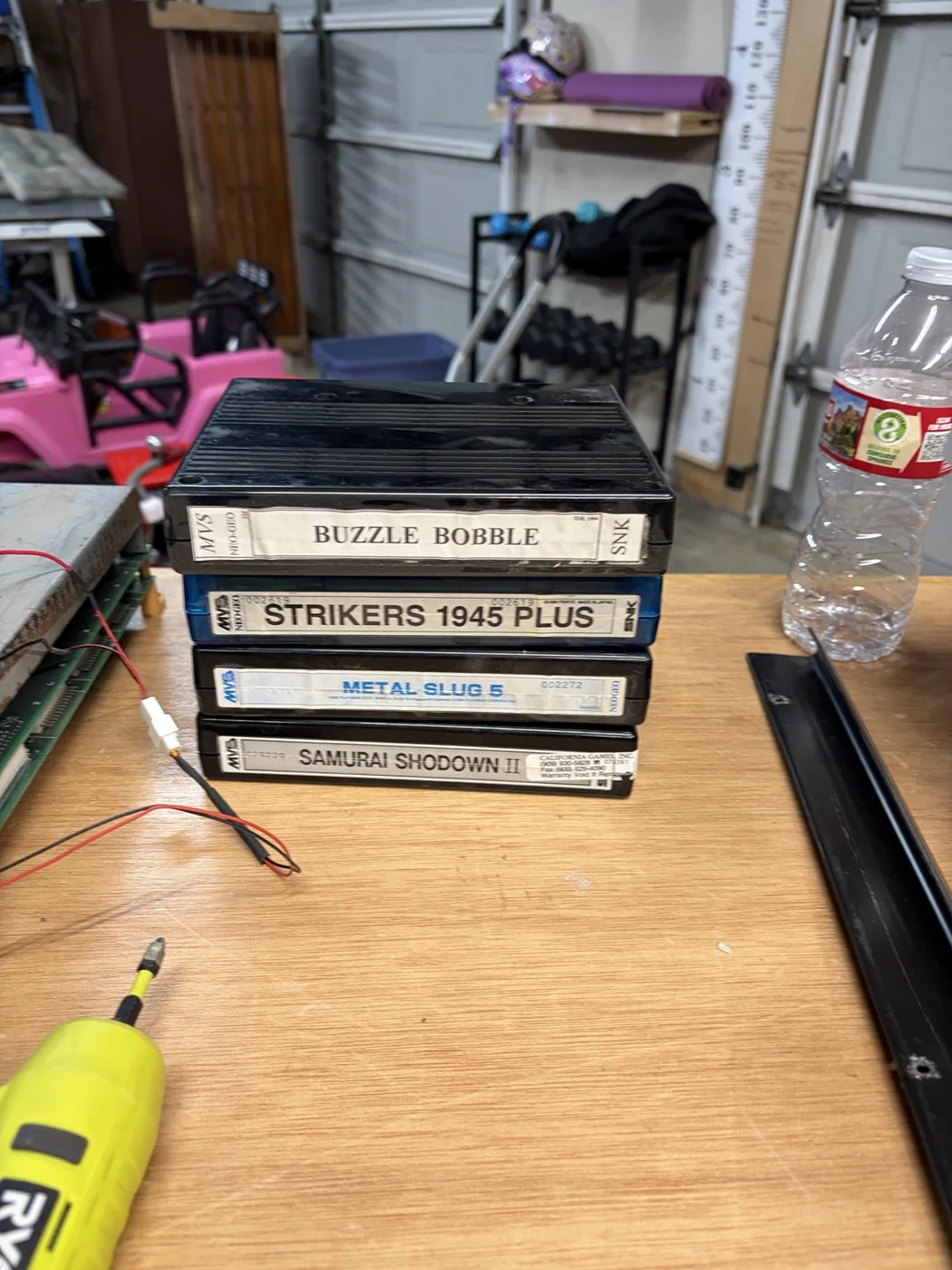
For a player, the business model disappeared. What remained was a small ritual: look at the game cards, choose a title, put a hand on the joystick. On a four-slot MVS, four installed cartridges share the cabinet; you select a game to play rather than running four games on four separate screens.[2]
There is something satisfying about a lineup small enough to know. You remember the puzzle game you nearly cleared. You have a favorite fighter. There is a shooter you keep meaning to get better at. Four carefully chosen games can give a machine a personality.
The hardware made that variety feel connected. Two joysticks. Four action buttons per player. A big screen surrounded by a cabinet that shuts out some of the room. You do not have to learn a new controller every time you change games.
And the home Neo Geo, known as the AES, carried closely matching arcade hardware into the living room. That connection mattered in an era when a home version could feel noticeably different from the machine you loved at the arcade.[1]
02 / The marquee is a menu
The games that explain the obsession.
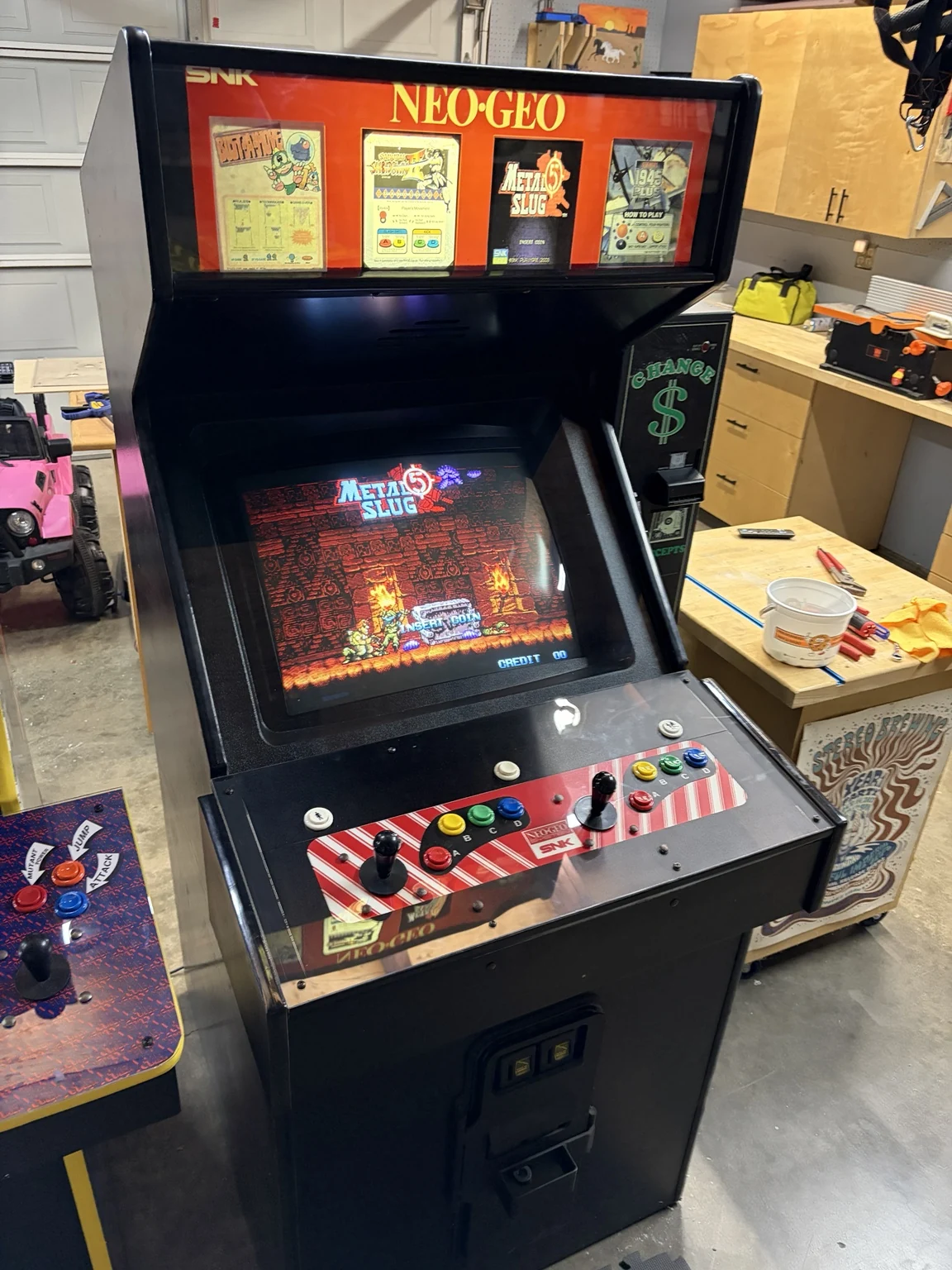
The game cards in my photos are a great introduction to the range of the MVS. Here is what makes those kinds of games so easy to return to—and where to go next.
A four-game menu in the wild
My July 28 photos from Morristown Game Vault in New Jersey show the same idea at work on another MVS cabinet. This is the arcade’s machine, rather than my garage cabinet.
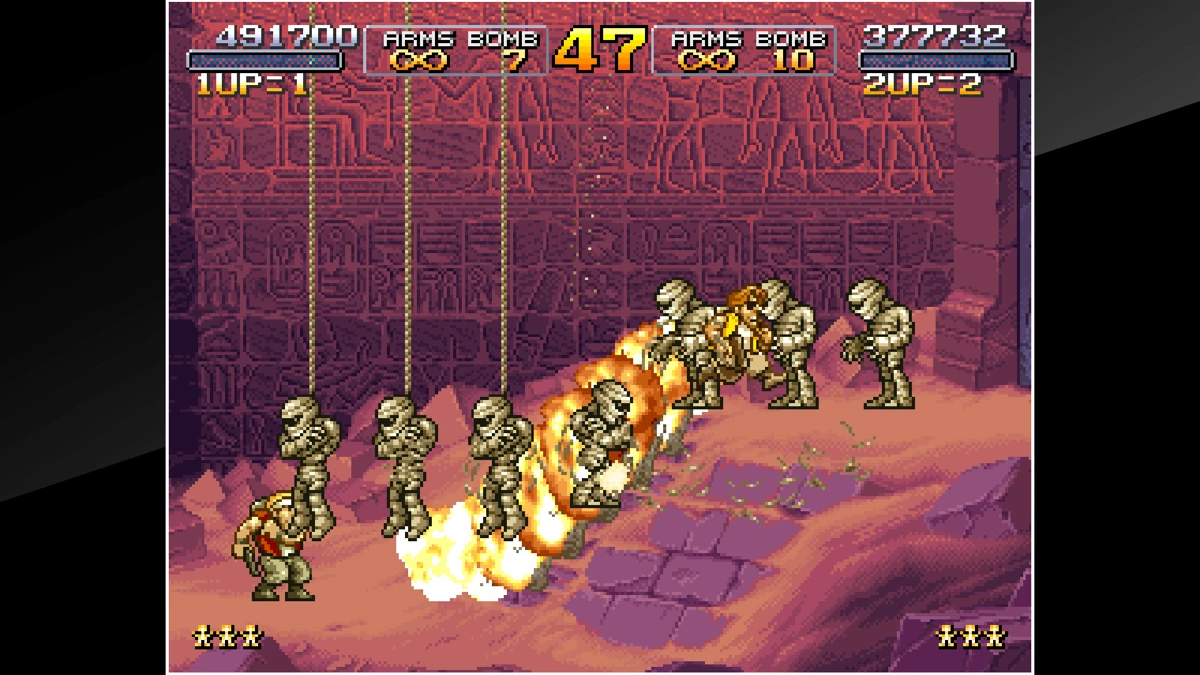
Metal Slug: every inch has a personality
Metal Slug understands that an explosion can be funny. Its soldiers, vehicles, and scenery are packed with little visual performances. The action is frantic, but pause your attention on almost any corner of the screen and there is something worth noticing.
The original arrived in 1996. Metal Slug X, released in 1999, reworked Metal Slug 2 with new weapons, enemies, and rearranged encounters. The “X” is not the Roman numeral for ten.[3][13] My photo above shows Metal Slug 5, a later entry from 2003.[13]
For a cabinet shared with friends, the attraction is immediate: move, shoot, jump, survive, and enjoy the ridiculous spectacle together. You can appreciate the art before you are any good at the game.
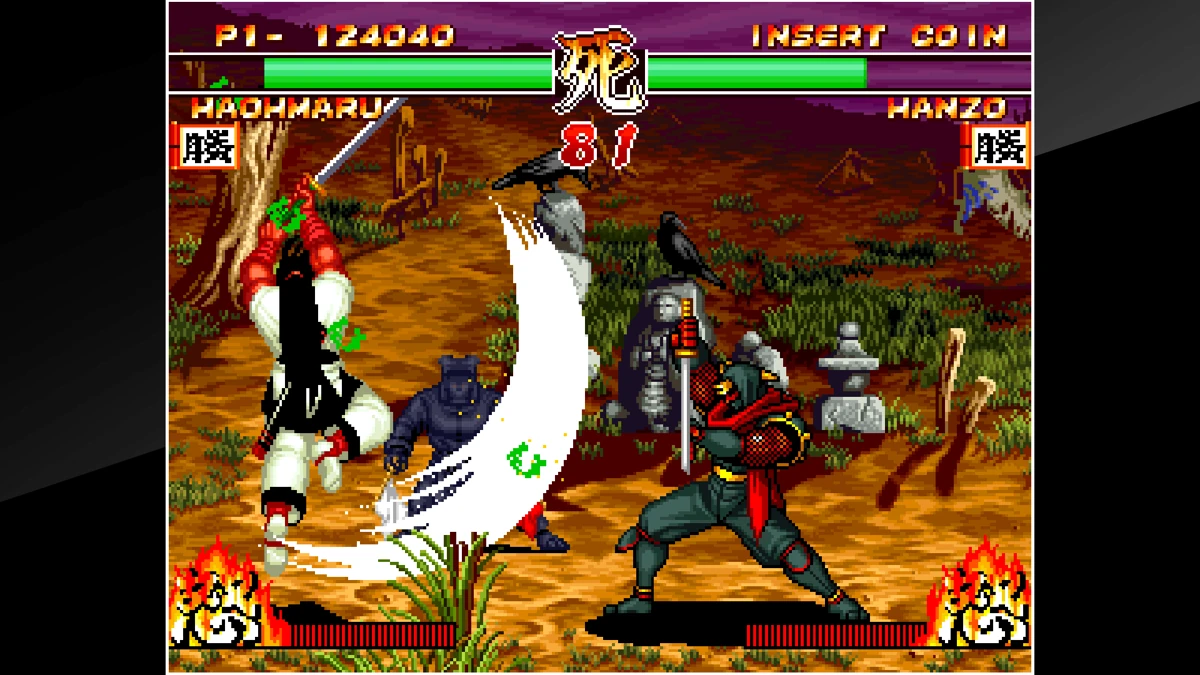
Samurai Shodown II: make the next hit count
Samurai Shodown II makes the space between two characters feel dangerous. A blade’s reach matters. A careless approach can be expensive. The anticipation before a clean hit is part of the entertainment.
SNK describes the series through the destructive force of individual blows, and that is a good explanation of its appeal. You can enjoy a duel as a contest of patience and nerve, even before you understand every technique.[4][5]
It also gives the cabinet a completely different rhythm from Metal Slug. The same buttons that just kept you alive through nonstop action now ask you to wait for the right moment.
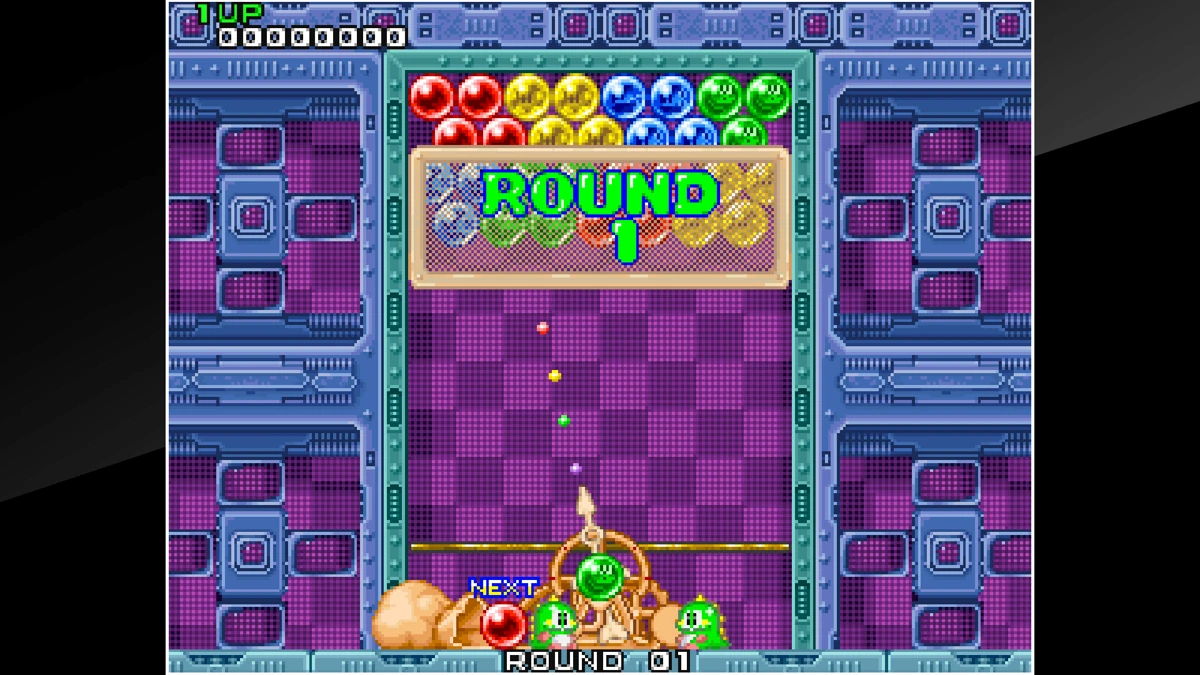
Puzzle Bobble: the game that welcomes everybody
The little dragons do a lot of work for this machine. Taito’s Puzzle Bobble—also familiar to many players as Bust-A-Move—gives a visitor a goal they can understand almost immediately: aim bubbles and connect at least three of the same color. Bub and Bob came from Taito’s earlier Bubble Bobble.[6][15]
Then the angles take over. A bank shot turns out to be possible. A cluster you thought was hopeless suddenly has a solution. One more bubble might fix everything.
This is why a good Neo Geo lineup benefits from variety. A puzzle game gives the machine an easy invitation for someone who has no interest in learning a fighting-game move list.
Strikers 1945 Plus: a very busy patch of sky
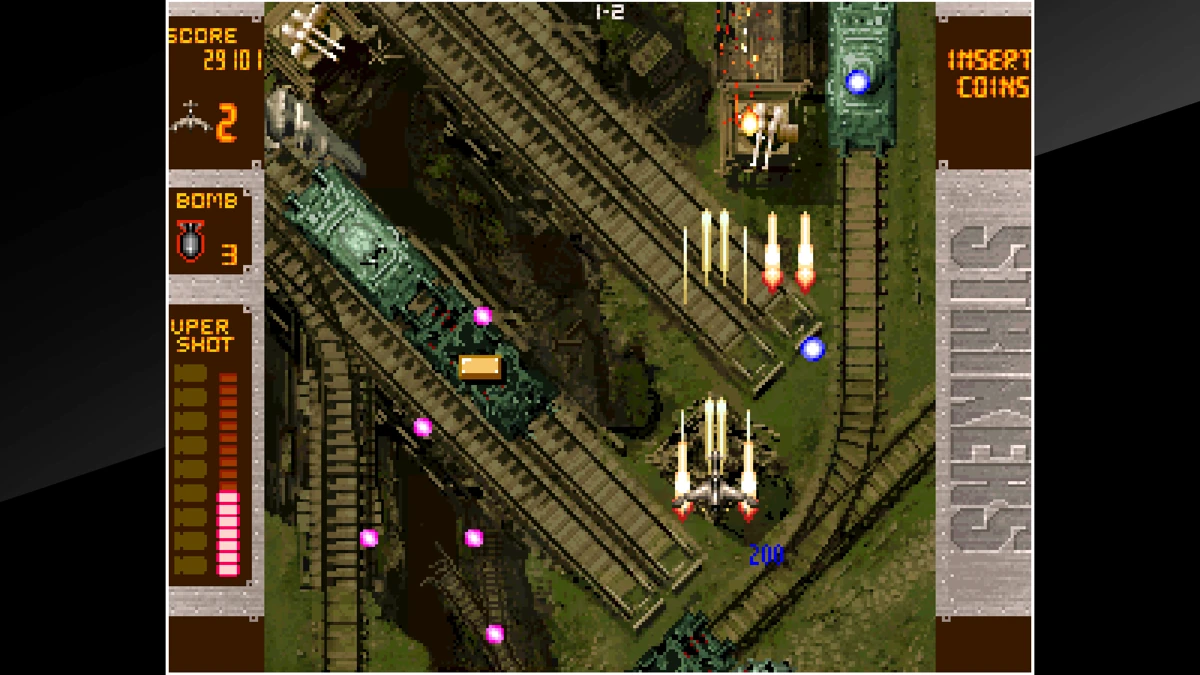
Psikyo’s Strikers 1945 Plus gives the marquee a different sort of intensity. Its aircraft and enemies turn the screen into a moving problem: where can you go, what can you destroy, and how long can you keep that safe route open?
Released in 1999, it combines standard fire, Super Shots, and Support Attacks.[7] The appeal is the concentration it demands. A small movement matters; a moment of hesitation can be the end of a promising run.
After a relaxed round of bubbles or a measured sword fight, it makes the same cabinet feel like an entirely different machine. That is the MVS idea doing its job.
03 / Keep exploring
Four more reasons the library matters.
The MVS story gets even better when you look beyond a single marquee. These are four very different directions for your next session.
The King of Fighters ’98
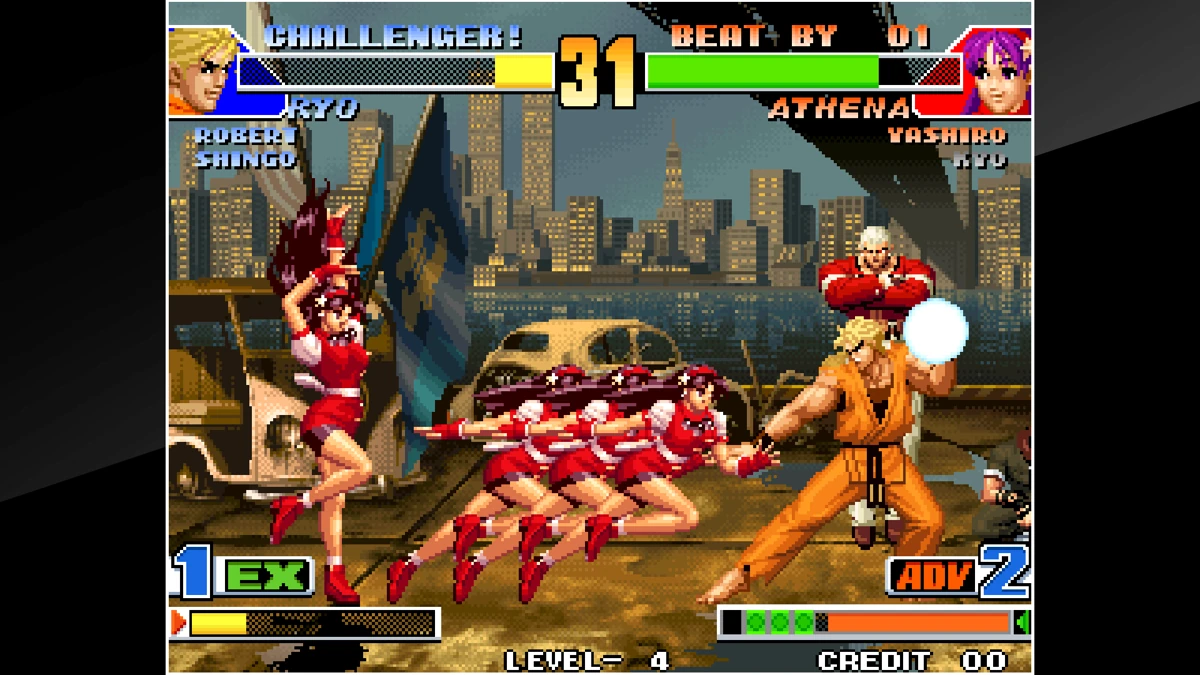
SNK brought together fighters from earlier KOF entries for a dream match, retaining Extra and Advanced modes.[8] It feels like a game you could make the center of an entire collection: enough different characters to keep a regular opponent interesting, and enough history to reward curiosity.
Windjammers
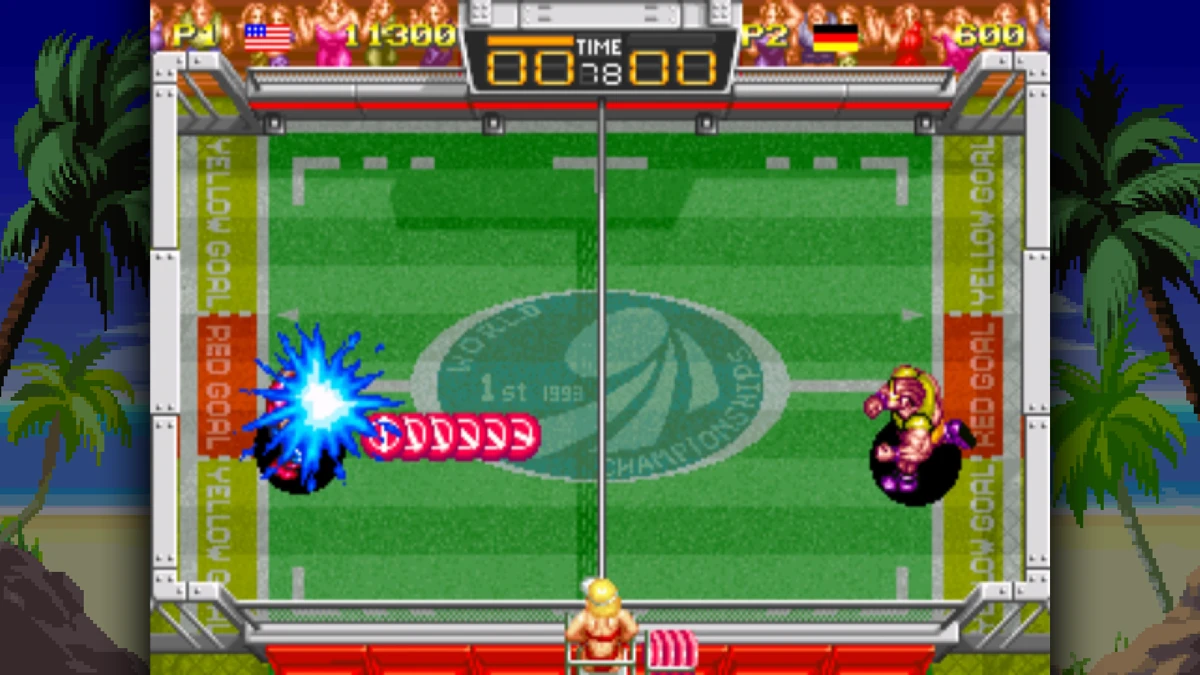
A flying disc, opposing goals, and two players who suddenly care a great deal about the score. The 1994 original turns an easy-to-read sport into a contest of positioning and special throws.[9] This is the one to put in front of a friend who says they do not really play arcade games.
Neo Turf Masters
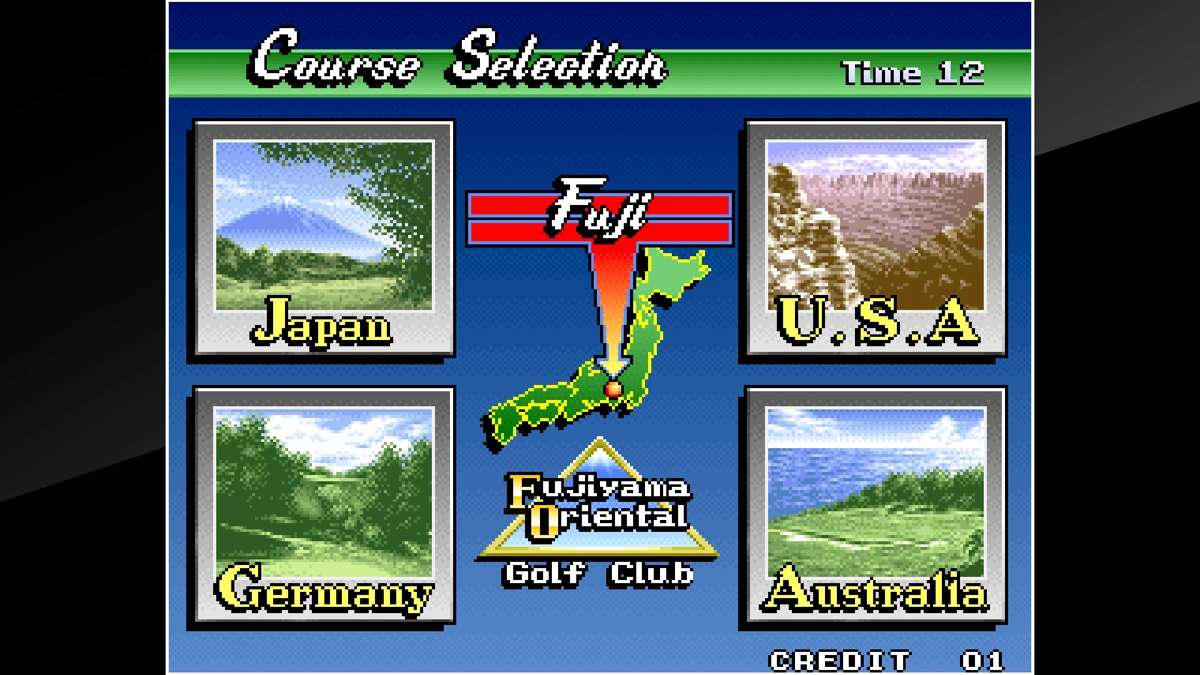
Six golfers with different abilities, international courses, and stroke or two-player match play give this golf game plenty to work with.[10] Its great trick is making the next shot feel important. A cabinet does not need explosions to hold a small crowd’s attention.
Garou: Mark of the Wolves
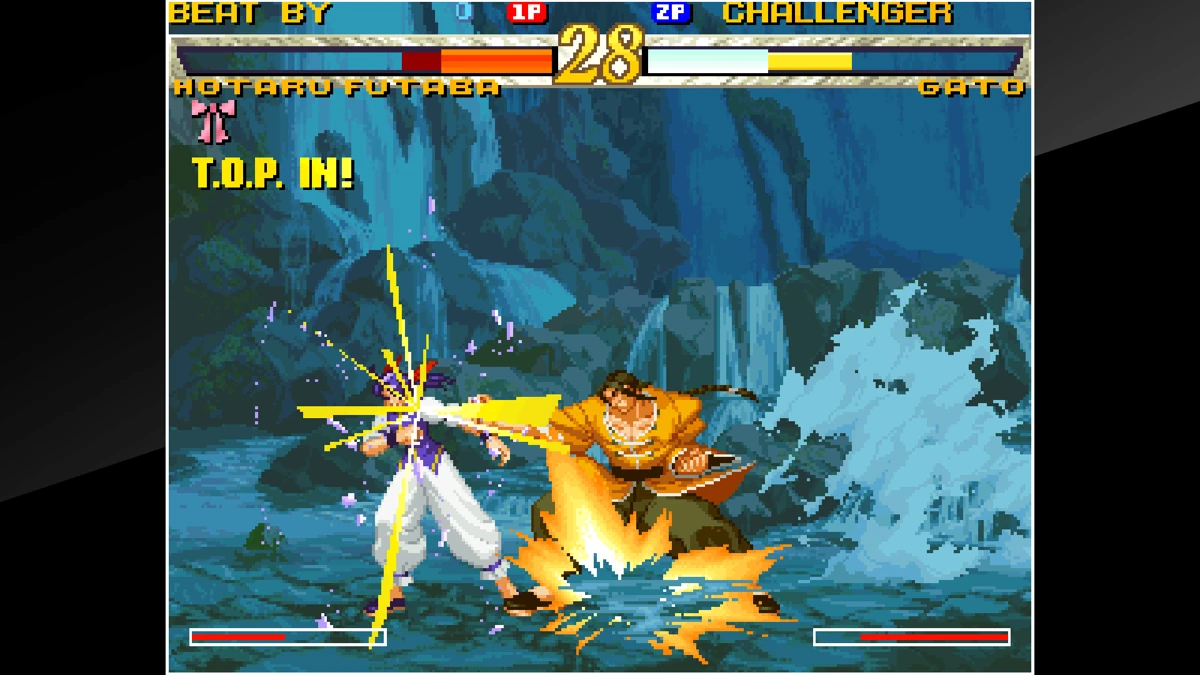
This later Fatal Fury entry puts Rock Howard at the center of a new generation.[11] Watch the movement and the character animation: it is a wonderful example of how polished a Neo Geo game could look late in the decade. It rewards both the person playing and the friend watching.
04 / The details worth knowing
Three things you might never have heard.
Your arcade progress could come home with you.
Neo Geo supported a removable memory card that could carry game progress between the AES home system and compatible MVS arcade machines. SNK specifically notes that support depended on the arcade equipment.[1]
This was game-supported progress, such as level information, rather than a modern emulator’s ability to freeze any instant.[2] The remarkable idea was continuity: the machine in a public place and the system at home could share a little piece of your game.
Think about that the next time you walk past an old Neo Geo. A feature that sounds quite modern was already part of its world.
Some of that beautiful 2D animation had motion capture behind it.
Art of Fighting 3: The Path of the Warrior came to the MVS in 1996. SNK confirms that its animation used motion-capture technology.[12][13]
That is a fun detail because motion capture is easy to associate with realistic 3D characters. Here, it helped inform the movement of a game drawn in sprites. The final image was still 2D, but the process behind its fluid motion was more surprising than it first appears.
It is also a reminder that “pixel art” describes the result, not a single way of making it. Different tools and techniques could lead to very different personalities on the same hardware.
It was keeping business stats, too.
The original four-slot operation manual lists coin drops, plays, continues, and average game times in the machine’s bookkeeping system. It even describes a planned way to transfer bookkeeping information to an office computer using a special memory card; the manual says the required supporting hardware was still in development.[2]
Behind the colorful marquee was a practical question: which game was earning its space? An operator could look past a personal favorite and examine what customers actually played. Even the paperwork side of the Neo Geo had some ambition.
05 / The next player
It still knows how to make someone walk over.
The Neo Geo is easy to admire as a collector’s object. The logos are great. The cartridges are intriguing. The game library gives you plenty to talk about.
But the photograph below gets closer to the reason I want a machine like this around: somebody sees the screen, reaches for the controls, and wants to find out what happens.
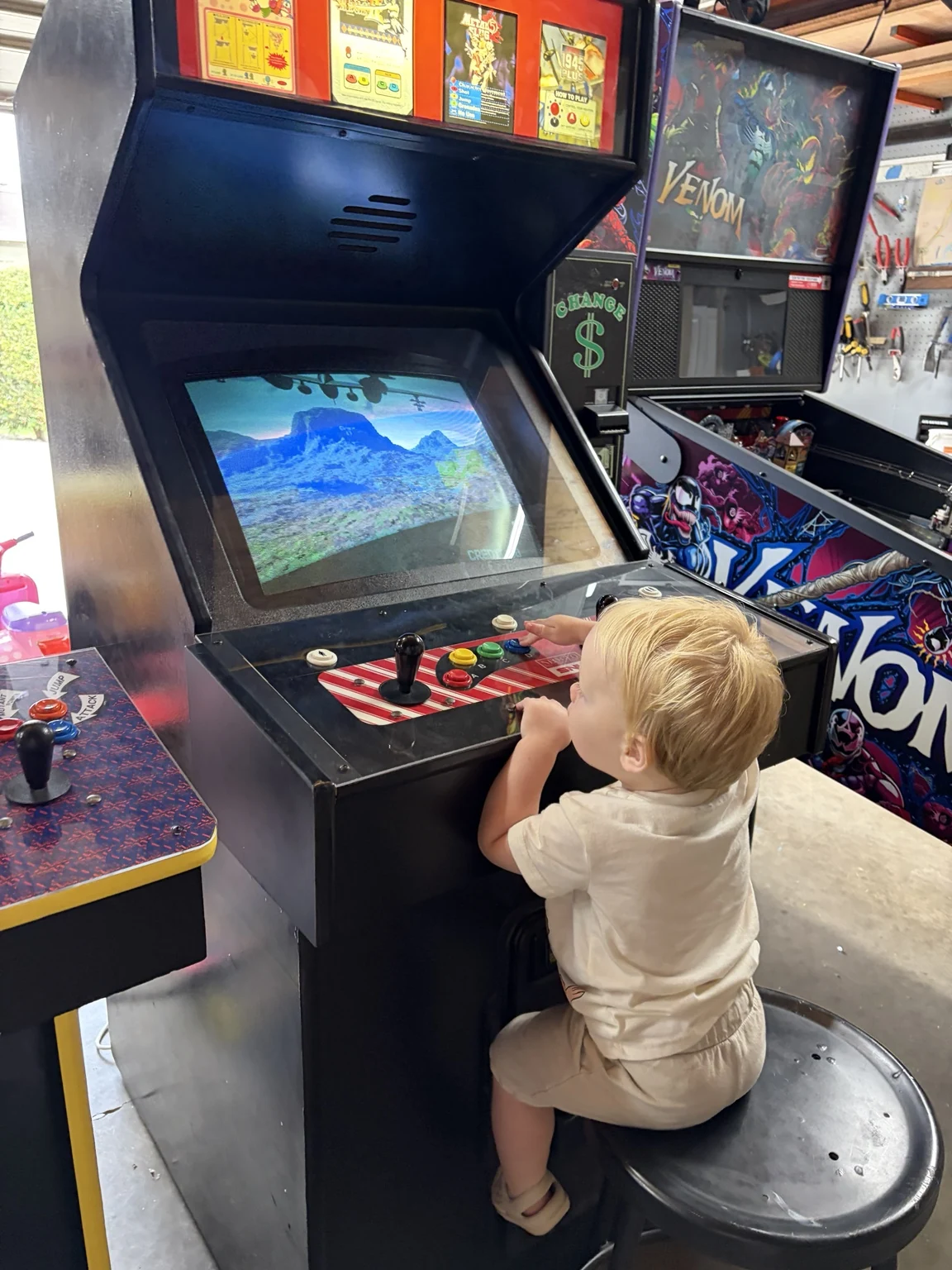
No explanation of the arcade market is needed at that moment. The machine is doing what it was built to do: getting someone curious enough to play.
A good Neo Geo lineup can keep that curiosity going for years. Learn a fighter. Chase a better run. Bring somebody over for Windjammers. Change a cartridge when you want the cabinet to have a different mood.
There will always be another machine to want. The special thing about the Neo Geo is how many reasons it gives you to switch this one on.
Keep playing the good stuff.
Sources & image credits
Cabinet and family photographs: Matt Pearce / Classic Coinworks. Gameplay images come from the publisher pages linked in their captions. The HAMSTER images show ACA NEOGEO rereleases of the original games; the Windjammers image comes from Dotemu’s modern rerelease. Game art and trademarks belong to their respective owners. Cabinet and gameplay images have been resized and compressed for the web. The NEO·GEO cover wordmark is sourced from Wikimedia Commons, which identifies it as a public-domain text-logo. Neo Geo remains an SNK trademark, used here to identify the article’s subject.
- SNK Neo Geo Museum — What’s NEOGEO?. Platform history, MVS economics, AES and memory-card support.
- SNK — MVS-4-25 operation manual. Original operator documentation; game selection and memory-card functionality.
- HAMSTER — Metal Slug X. Original release year and its relationship to Metal Slug 2; screenshot.
- SNK — Samurai Shodown II. Weapon-based fighting and the importance of powerful individual hits.
- HAMSTER — Samurai Shodown II. 1994 release and screenshot.
- HAMSTER — Puzzle Bobble. 1994 release, Taito, Bub and Bob, and puzzle rules; screenshot.
- HAMSTER — Strikers 1945 Plus. 1999 release, Psikyo and weapon systems; screenshot.
- SNK — The King of Fighters ’98. The original game’s dream-match concept and Extra/Advanced modes.
- Dotemu — Windjammers press kit. Original 1994 release and image from the modern rerelease.
- HAMSTER — Big Tournament Golf. 1996 release, golfers, courses and play modes; screenshot.
- HAMSTER — Garou: Mark of the Wolves. 1999 release and its place in Fatal Fury; screenshot.
- SNK — Art of Fighting Anthology announcement. SNK’s confirmation of motion-capture technology in Art of Fighting 3.
- SNK Neo Geo Museum — Title Catalogue. Original MVS release dates, including Metal Slug (1996), Metal Slug 5 (2003) and Art of Fighting 3 (1996).
- HAMSTER — The King of Fighters ’98. Screenshot from the ACA NEOGEO edition of the original game.
- TAITO — Puzzle Bobble series announcement. Confirms the alternate Bust-A-Move title and the Bubble Bobble connection.
- TouchArcade — Big Tournament Golf / Neo Turf Masters. Confirms the two names for the golf game.