
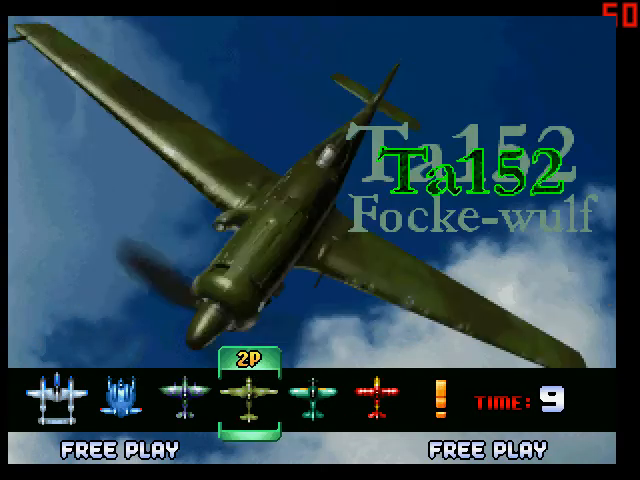
The strangest plane on the selection screen is not something Psikyo made up. The Flying Pancake really existed. It just never fought the battle this arcade game gives it.
Released in 1999, Strikers 1945 Plus turns aircraft history into a very different kind of air show. Its six standard choices mix combat aircraft with experimental designs; a seventh hides behind the question mark. Here is what you are looking at, what the game changes, and a reason to try each one. [1–3]
Flying Pancake: real aircraft, unreal second life
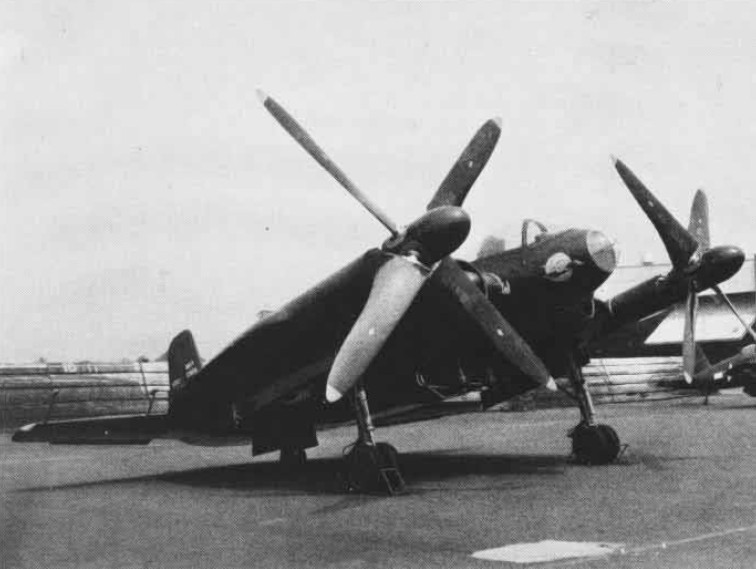
In real life: The game calls it the F-5U. The experimental aircraft was the Vought XF5U-1: a broad, disc-like fighter with two large propellers. It never flew. Vought records ground tests and serious vibration problems before cancellation in 1947. Its smaller predecessor, the V-173, did fly, completing 199 flights. Those are two different aircraft, not two names for the same successful prototype. [4]
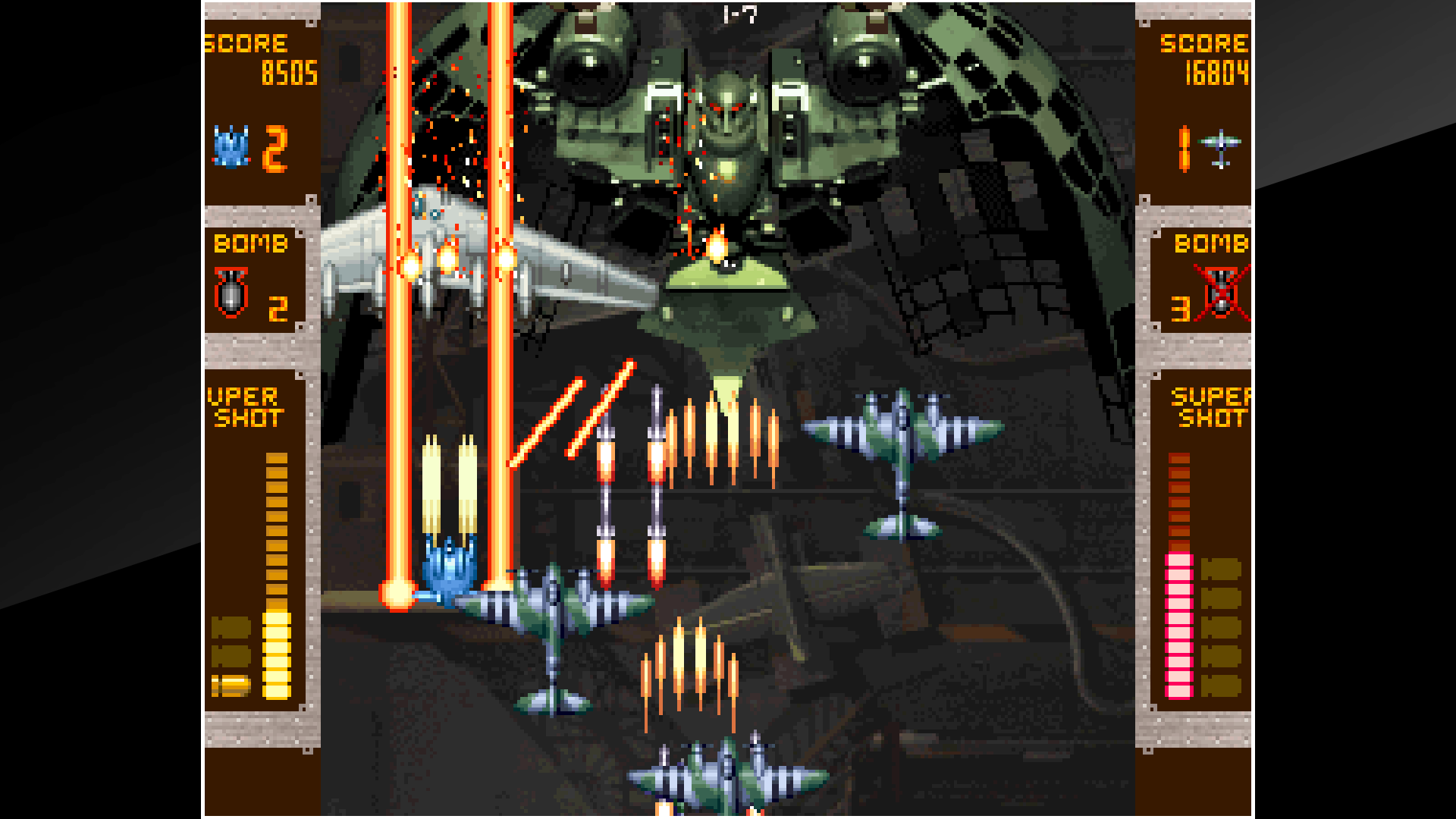
In the game: Search Laser and Buster Laser trade firepower for quick movement, according to Psikyo. [2]
Try it for: Movement. If your first instinct is to dodge into space rather than sit under a target, start here. That is a play-style suggestion, not a claim that an experimental aircraft handled like its sprite.
P-38 Lightning: the silhouette you cannot miss
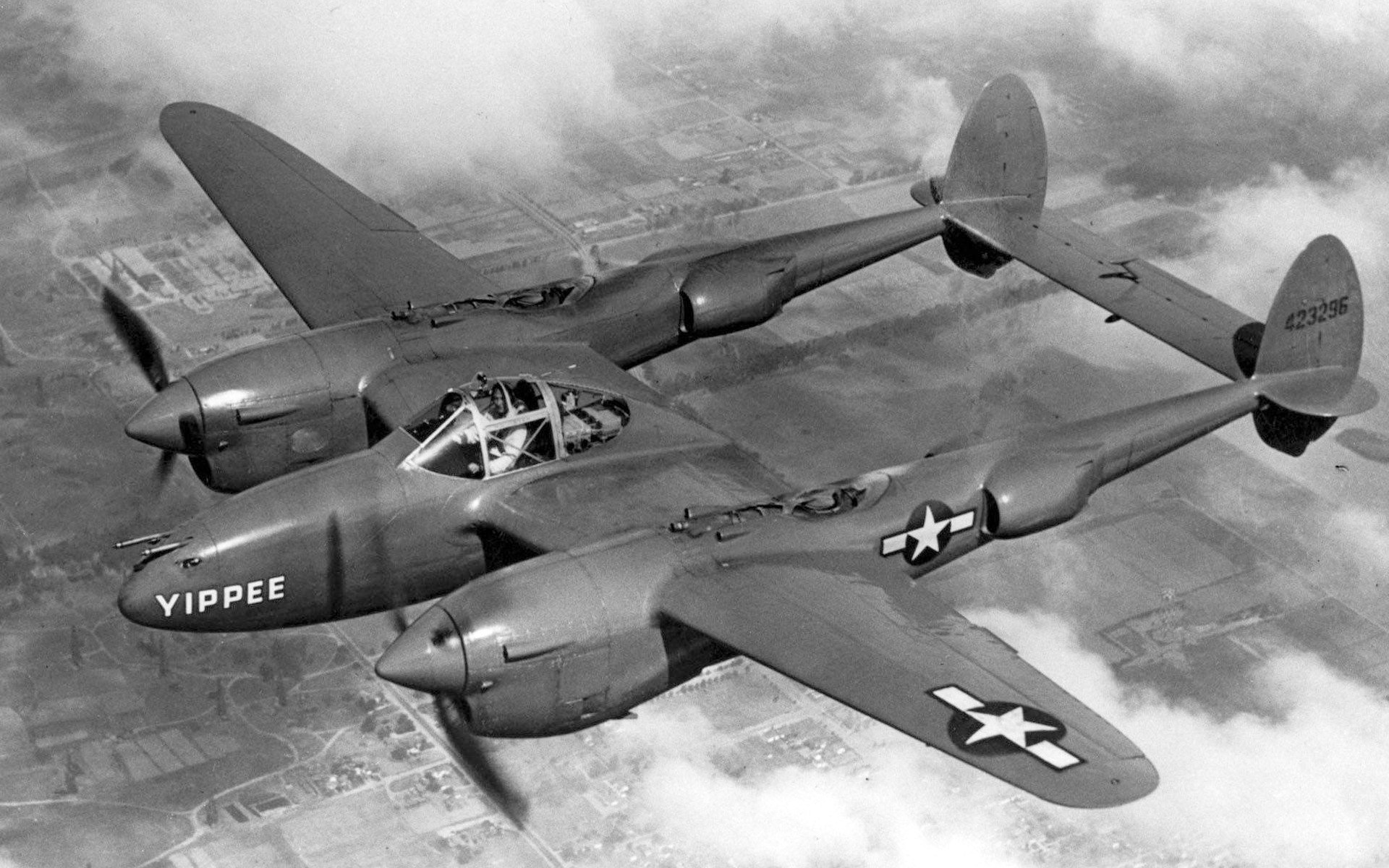
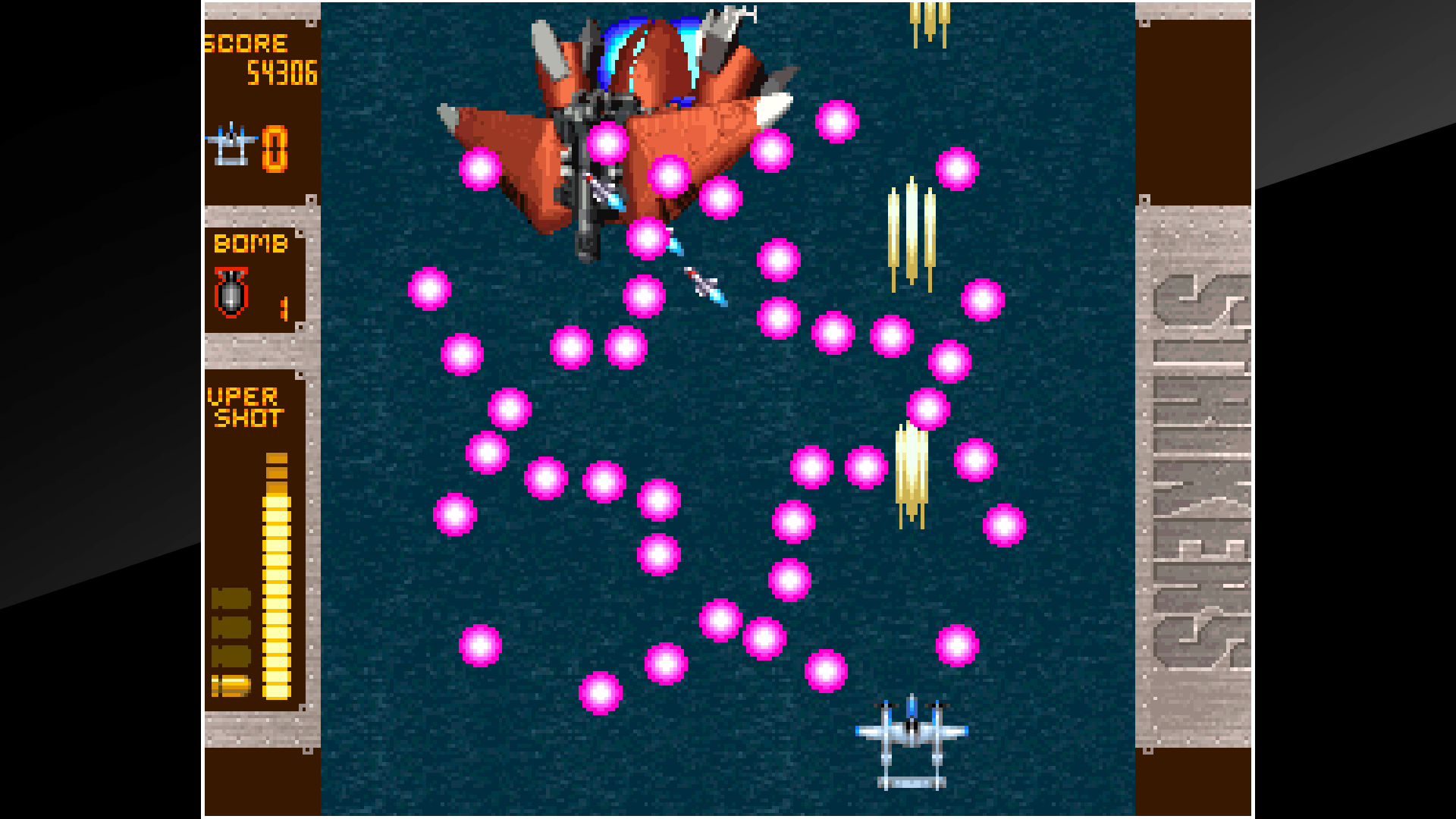
In real life: Two engines, two tail booms and a central cockpit make the Lightning easy to spot. The P-38 served as a fighter, reconnaissance aircraft and long-range escort, among other roles. The National Museum of the U.S. Air Force describes a design that became especially important across the Pacific. The game’s flyer names the P-38 without specifying a production variant. [1, 5]
In the game: Homing missiles are paired with the close-range Justice Attack Super Shot. [2]
Try it for: The contrast between safer tracking fire and a deliberate close approach. Familiar aircraft does not automatically mean the easiest aircraft.
Spitfire Mk VI: a specialist behind a famous name
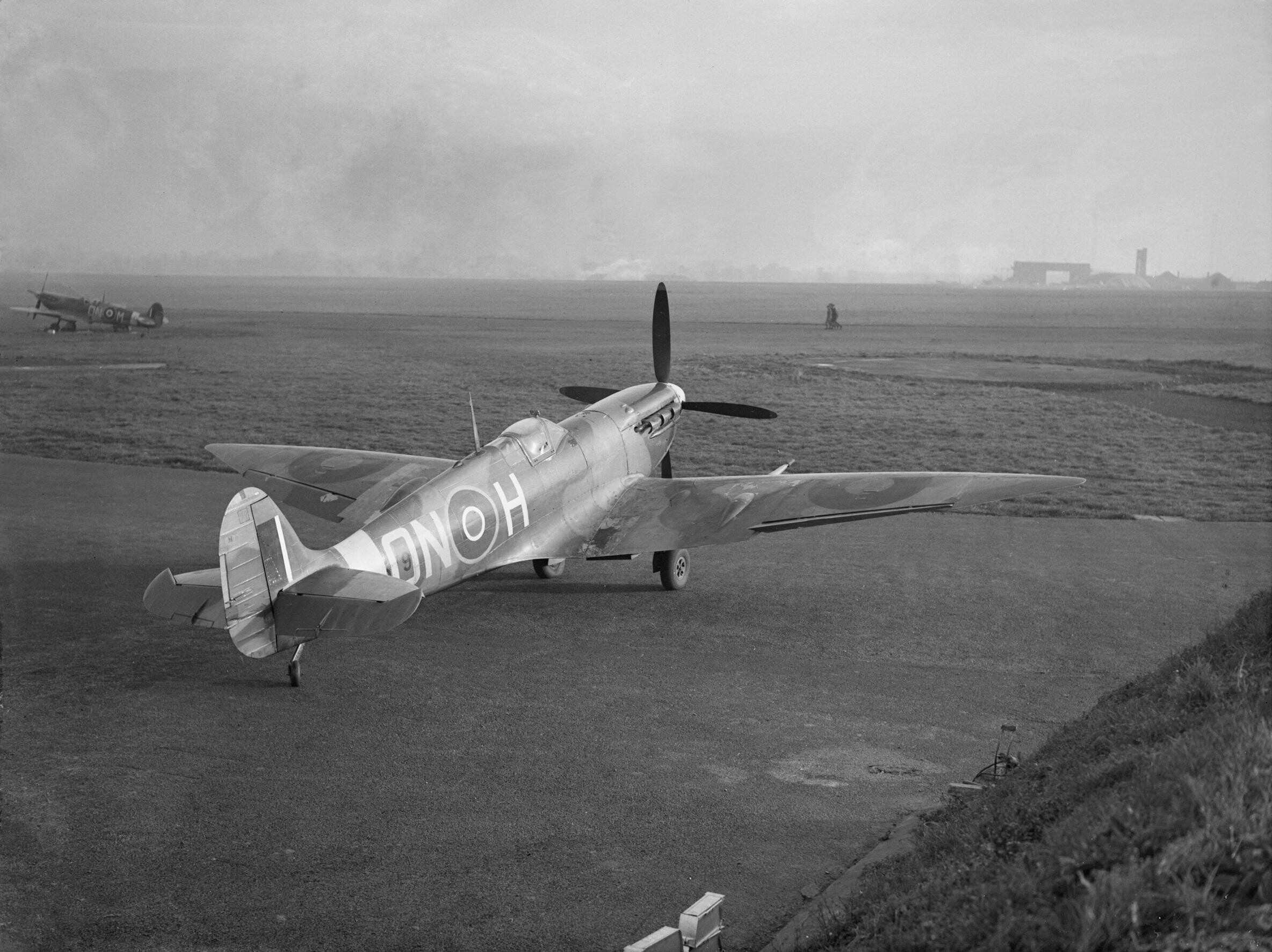
In real life: This is specifically the Mk VI, not a generic Battle of Britain Spitfire. BAE Systems’ heritage record identifies it as a high-altitude interceptor developed from the Mk V, with a pressurised cockpit and four-bladed propeller. The familiar outline hides a particular job. [6]
In the game: Rapid-fire rockets and Royal Napalm Kai are its main attractions. Psikyo recommends it to beginners. [2]
Try it for: Your first serious run. Learn when to release the charged attack and when to call support before chasing a favourite aircraft’s reputation.
Focke-Wulf Ta 152: built to go high
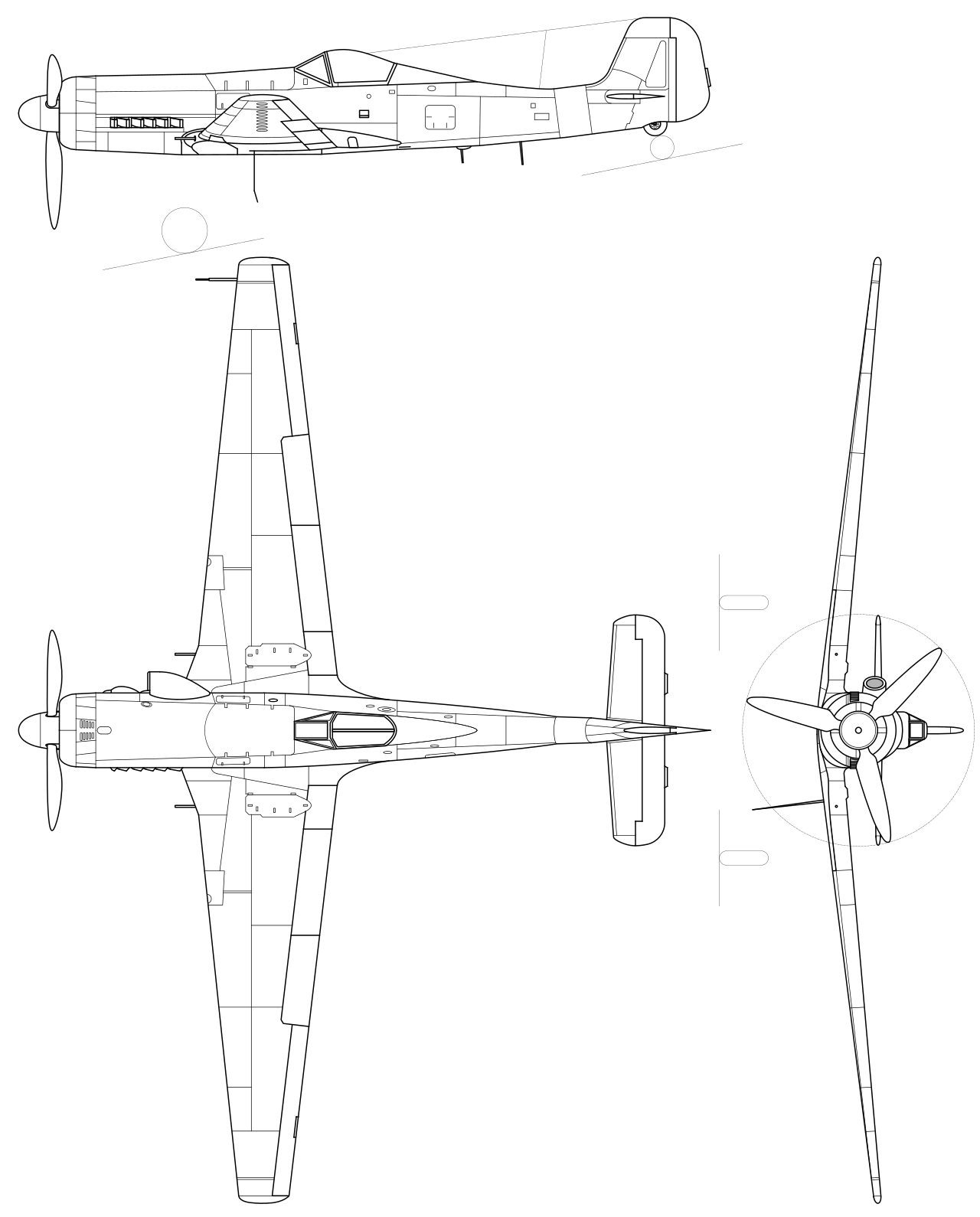
In real life: The Ta 152’s long-winged high-altitude form grew from the Fw 190 family. The Smithsonian’s surviving aircraft is an H-0, a useful reference for the type rather than proof of the game’s exact subvariant. It belongs to the very late-war end of this selection screen, not the opening years of the conflict. [7]
In the game: Large rockets attack enemies; Plasma Mine can erase their bullets. [2]
Try it for: Learning to use an attack defensively. Watch what happens to the incoming pattern when you deploy the mine; do not judge the plane only by how dramatic its shots look.
Zero Fighter Type 52: look past the nickname
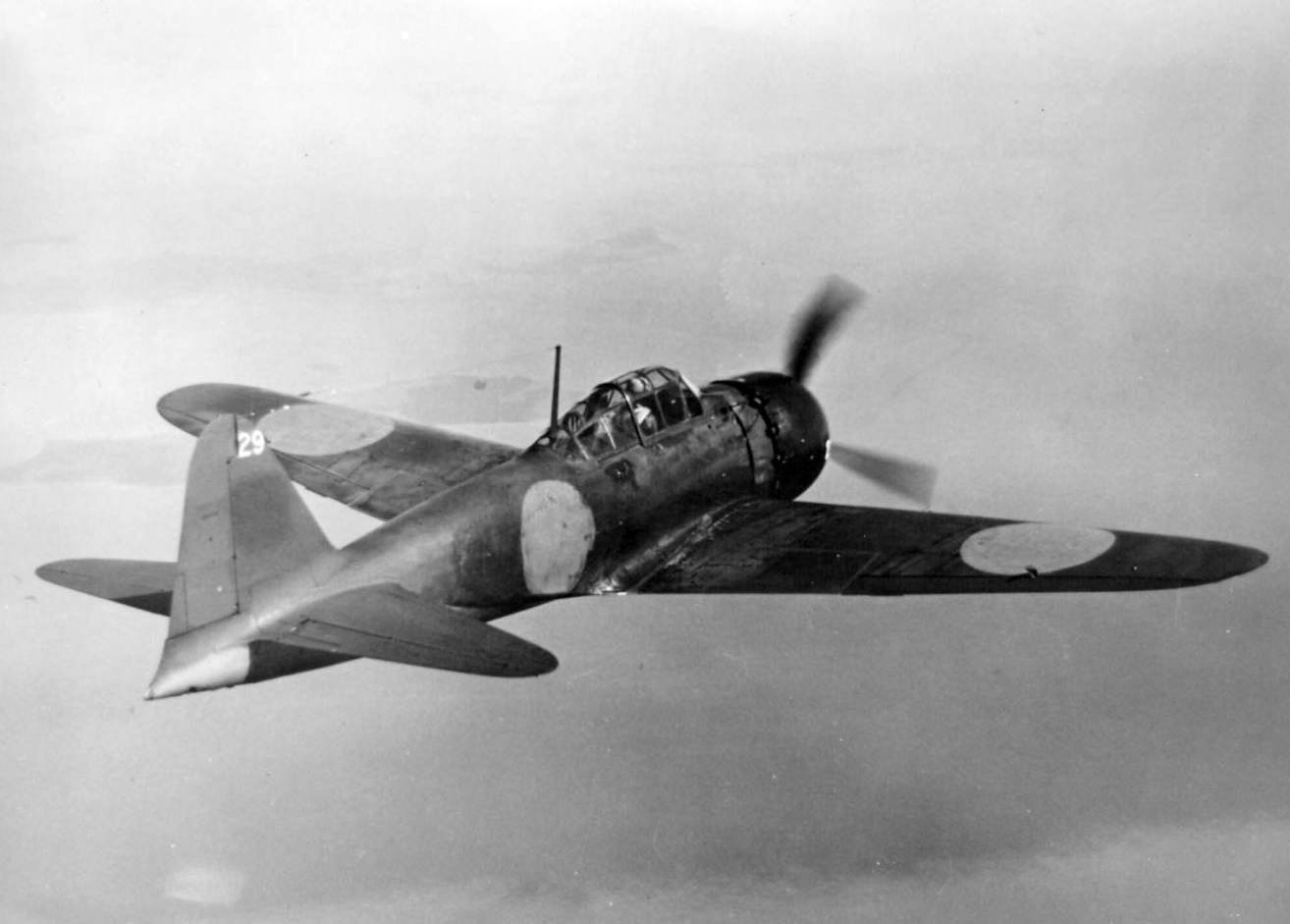
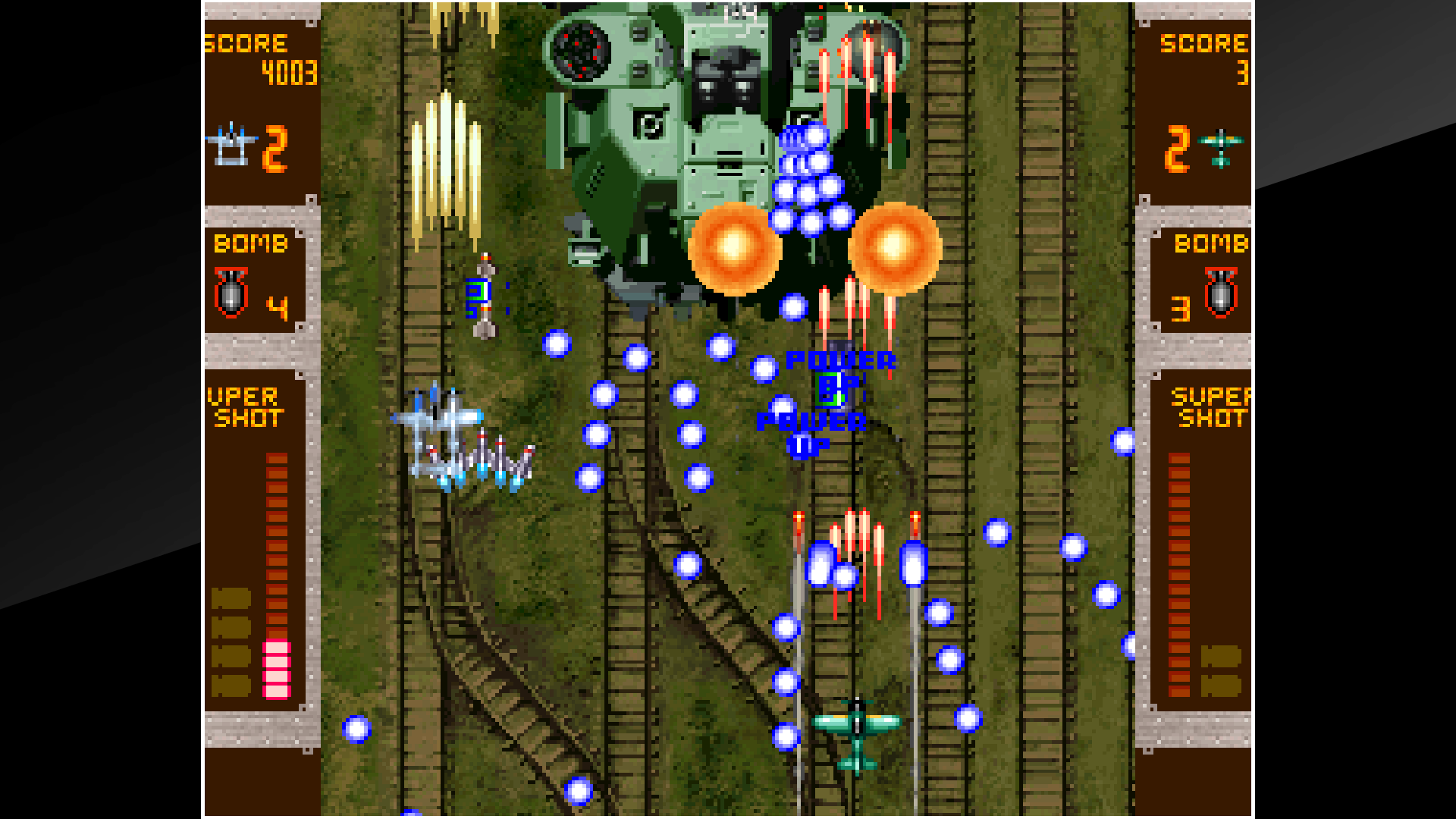
In real life: The flyer specifies Type 52, generally rendered Model 52: the A6M5 version of Mitsubishi’s Zero. That matters when choosing reference photos. An earlier A6M2 is still a Zero, but it is not the same variant. The later model reached operational squadrons in late 1943; the name alone is not enough to identify it. [1, 8]
In the game: Rocket-launcher fire, Zero-type Missile and Fugaku support make up the game’s version. [2]
Try it for: A fresh rhythm after the Spitfire. Compare how you place the two aircraft’s attacks against the same early enemies instead of assuming historical agility decides the game.
Fiat G.56: the prototype hiding in plain sight
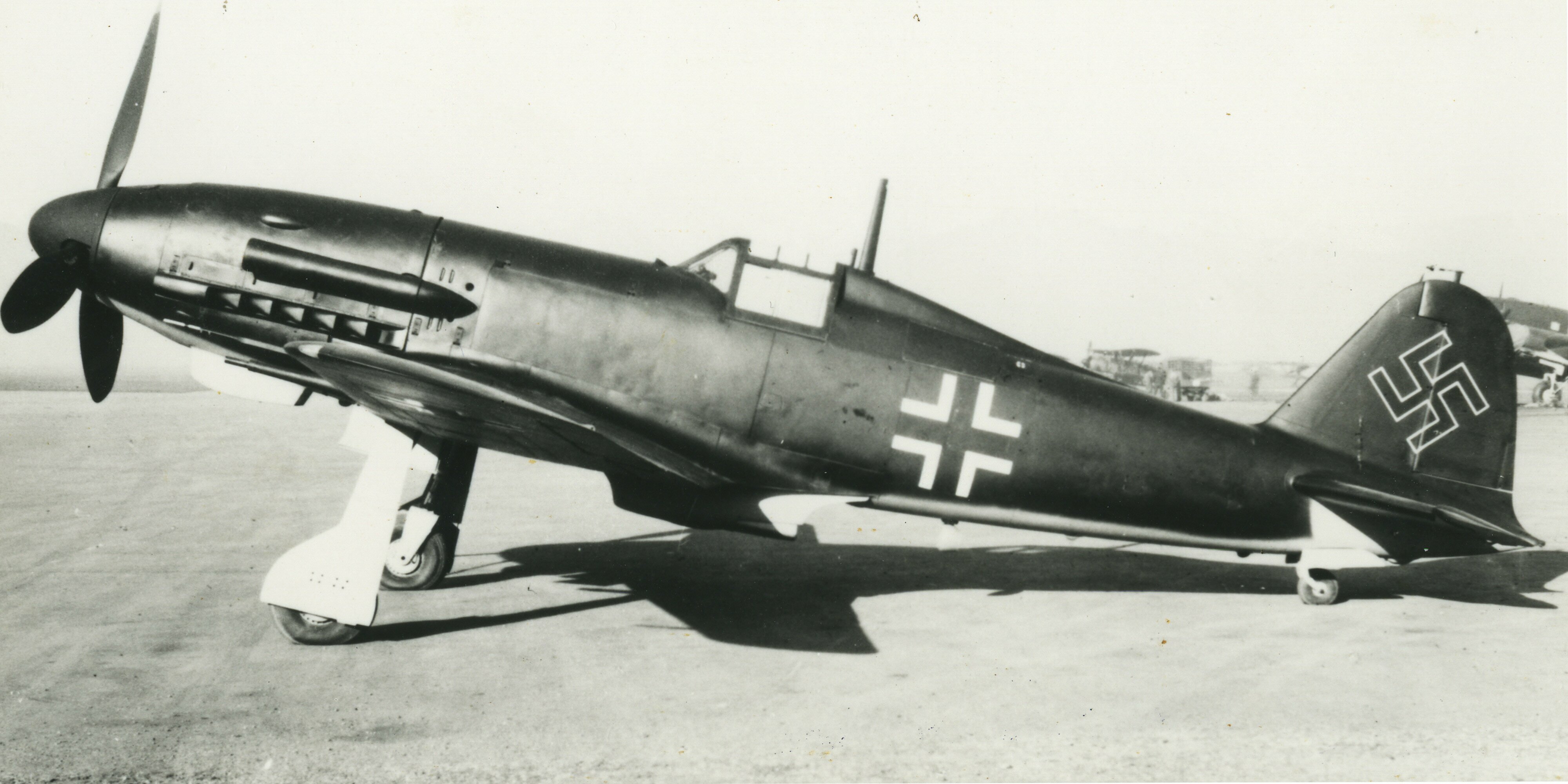
In real life: Do not substitute a G.55 photo here. The G.56 was a development using the larger Daimler-Benz DB 603A engine. An institution-hosted aviation-history paper records two prototypes and a first flight on 28 March 1944. It was a real, highly unusual choice for an arcade roster, not an invented Italian counterpart to the better-known fighters. [9]
In the game: Floating mines, Cluster Laser and a remotely controlled Junkers support formation reward experimentation. [2]
Try it for: Experimenting with placement and support control. Give the aircraft a few repeat runs before deciding whether its less conventional attacks suit you.
Hidden bonus: P55 Ascender
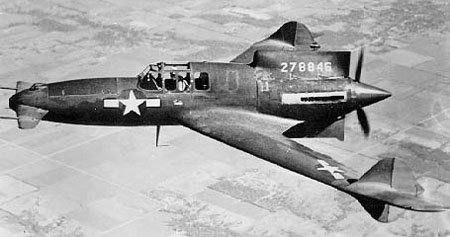
In real life: The Curtiss XP-55 puts the engine behind the pilot and a small control surface near the nose. Unlike the XF5U, it did fly. Three prototypes were built, but serious handling problems helped end the programme. The Smithsonian holds the surviving second prototype. The game drops the experimental “X” and calls its secret choice P55 Ascender. [2, 10]
In the game: Heat Missiles and guided Search Boomerang attacks give this hidden choice its weapons. [2]
Try it for: Curiosity. There is something satisfying about uncovering a secret aircraft, especially when the real prototype was nearly as unusual as its arcade role.
Choose a plane, then learn its timing
The useful comparison is not “which real fighter would win?” These aircraft come from different roles and stages of development, and the game is full of weapons that never belonged to them. The interesting part is how Psikyo turns each outline into a playable personality.
Your first credit: Try the Spitfire, the developer’s beginner recommendation. Then change one thing: choose the Pancake for movement, the P-38 for a close-range challenge, or the Ta 152 to explore bullet-erasing defence. These are starting points, not a tier list. [2]
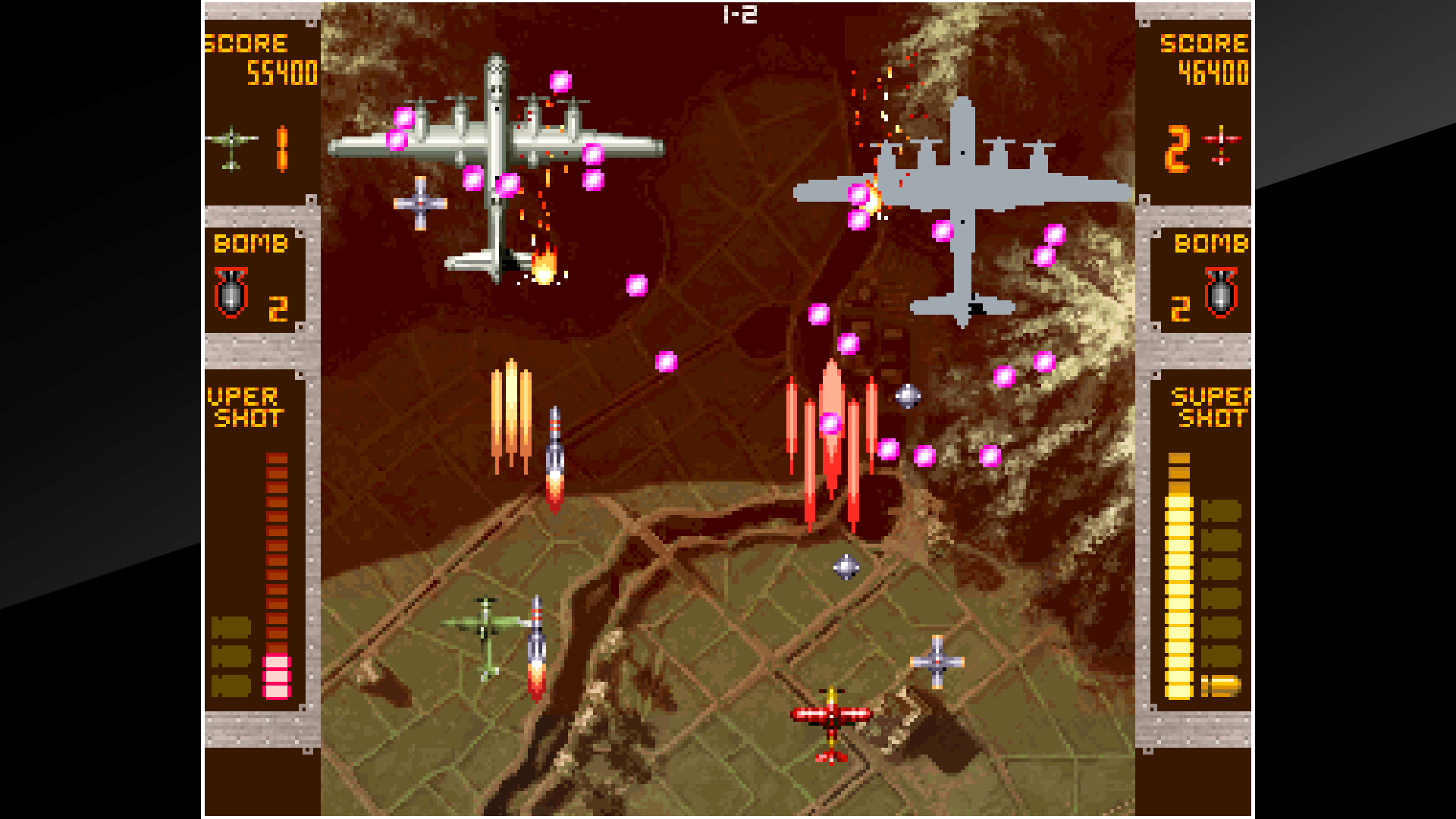
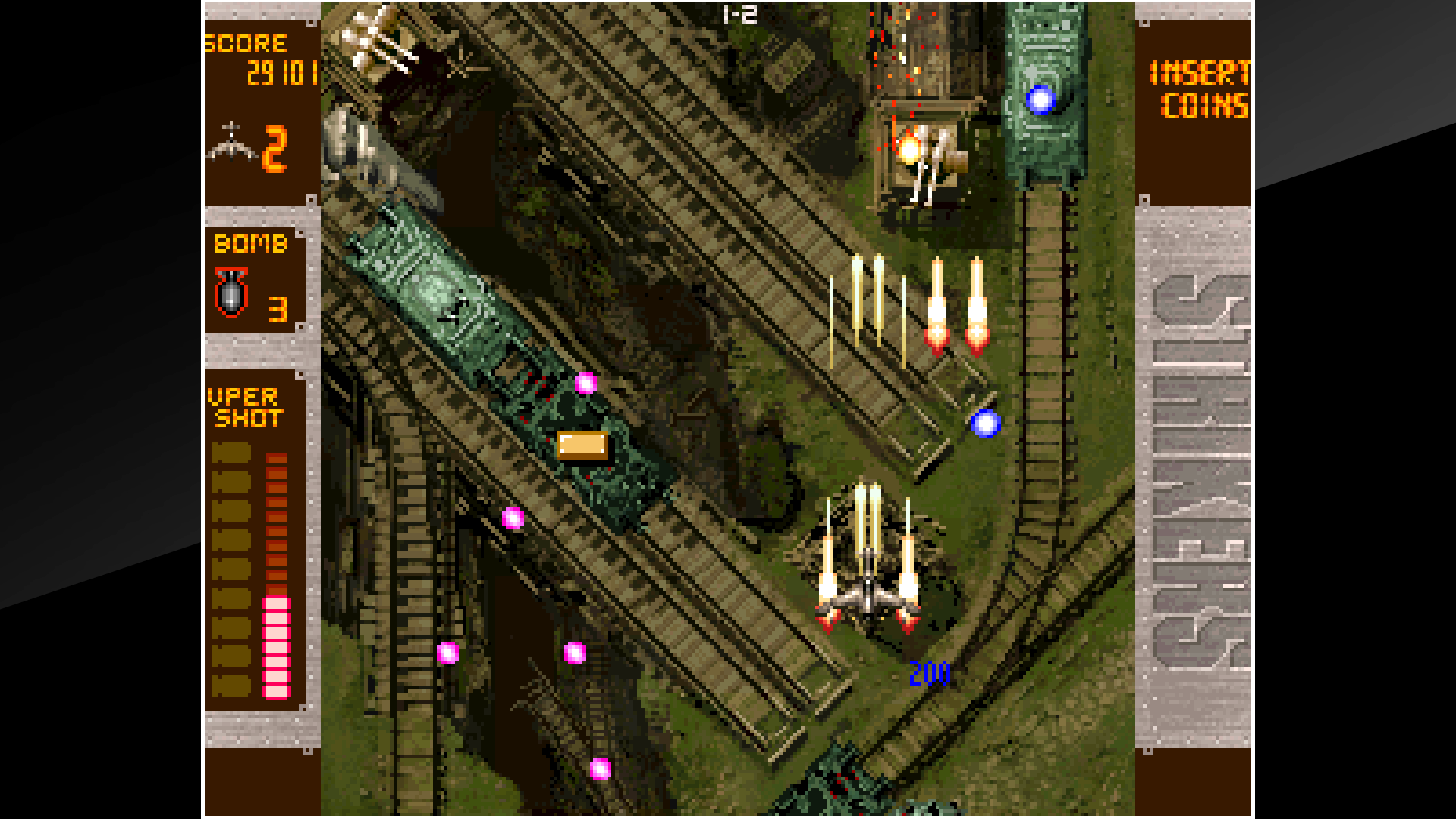
The two buttons that matter: A fires the main shot. Hold it, then release for a stocked Super Shot. Hitting enemies fills the gauge; aircraft differ in their stock and charging behaviour. B calls support, useful when the screen becomes dangerous. Follow the controls shown on the cabinet. [3]
For a fair comparison, replay the same opening with two aircraft. Notice which enemies you miss, when you use support and whether the movement feels comfortable. That will tell you more than a historical top-speed number.
Which would you pick: the proven Lightning, the dependable starting-point Spitfire, or the experimental Pancake that finally gets to fly?
About this comparison
Aircraft names follow the original U.S. flyer. Gameplay descriptions are paraphrased from Psikyo’s archived Japanese aircraft and system pages, with attack names translated or transliterated for readability. Historical claims come from manufacturer, museum and institutional sources, not the game’s promotional history. Photographs identify their actual variants; the Ta 152 is illustrated with a credited technical diagram. None of the images is AI-generated.
Sources & image credits
Game images remain copyrighted by their respective rights holders. Official gameplay stills: HAMSTER / Psikyo. They illustrate this game-specific historical comparison; no unrestricted reuse licence is claimed.
Fiat G.56 photograph: Fotoafdrukken Koninklijke Luchtmacht / NIMH, 2157_001-042, CC BY-SA 4.0, unmodified. Historical image variants and credits appear below each image.
- Original U.S. game flyer
- Psikyo aircraft guide (archived)
- Psikyo controls (archived)
- SNK game information
- Vought XF5U history
- Vought V-173 history
- USAF Museum P-38 history
- [6] BAE Systems: Vickers-Supermarine Spitfire, Mk VI variant
- [7] Smithsonian: Focke-Wulf Ta 152 H-0/R11
- [8] U.S. Navy: captured A6M5 / Model 52 Zero
- [9] ASI / Palermo museum / Italian Air Force seminar: G.56, PDF pp. 46–47
- [10] Smithsonian: Curtiss XP-55-CS Ascender
- Spitfire photograph: F/O F. J. Brock / IWM CH 18083
- Ta 152 diagram: Kaboldy, CC BY-SA 4.0; unmodified
- Zero photograph: U.S. Navy / National Museum of Naval Aviation, 1996.488.159.027
- Fiat photograph: Fotoafdrukken Koninklijke Luchtmacht / NIMH, 2157_001-042; unmodified


