
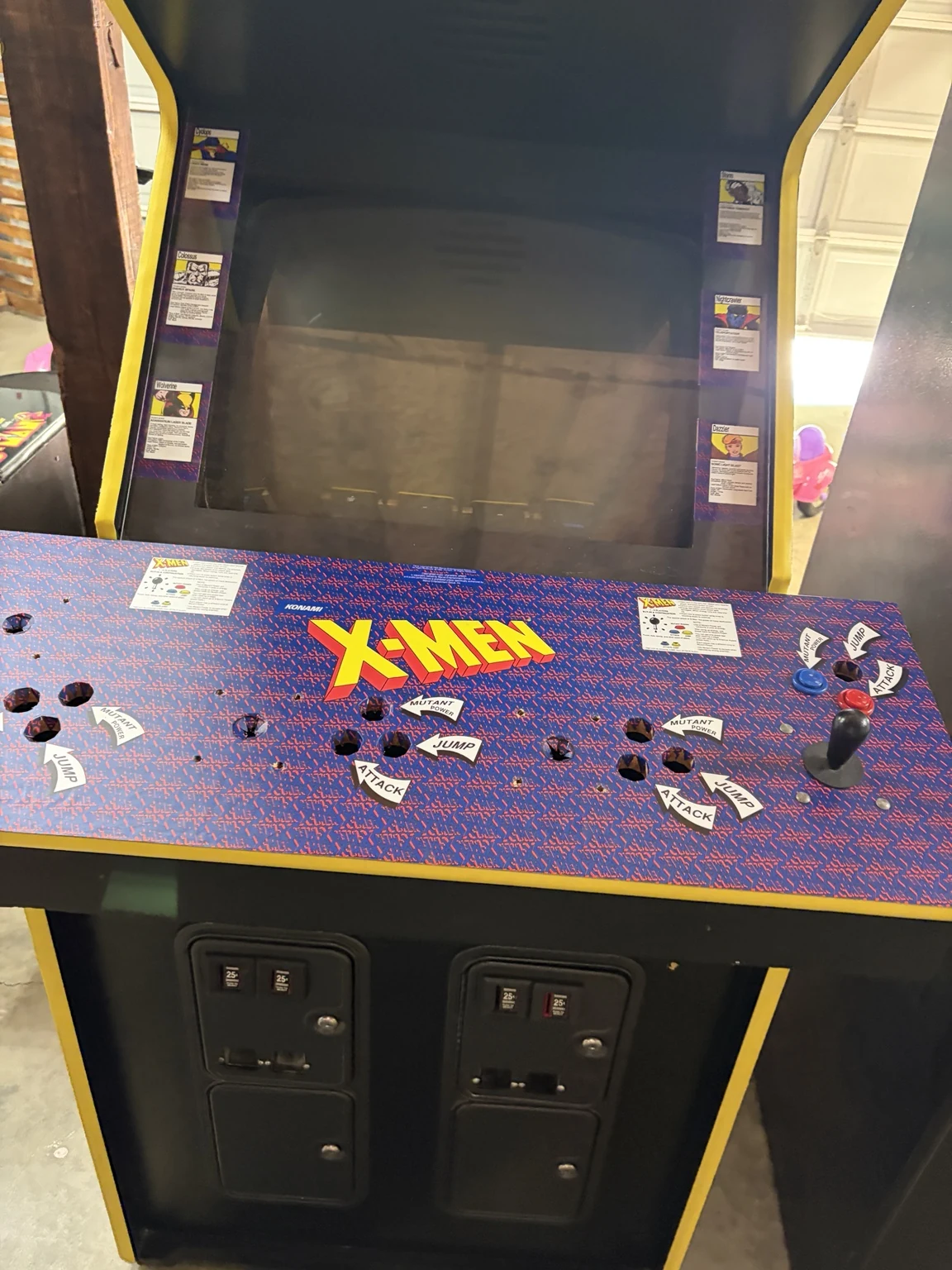
Put your hands on two arcade machines and they can feel completely different before the first enemy appears. The joystick’s grip, resistance, and movement all play a part.
Sanwa and Happ are useful names to know, but neither is one single joystick. This guide compares Sanwa’s JLF/JLX family with the SUZOHAPP Competition and Super. It is a buying and compatibility guide, not a hands-on performance test.
This article includes affiliate links. As an Amazon Associate I earn from qualifying purchases.
Compare models, not just logos
Sanwa’s JLF is an established arcade lever family; JLX and JLX2 are separate models you will also encounter. On the Happ side, the Competition and Super are different mechanisms. A feature on one does not automatically apply to the other. 1
| Model | Direction setup | Useful distinction |
|---|---|---|
| Sanwa JLX2-TP-8YT | 4-way or 8-way using its GT-8X gate | PCB connector; optional guide inserts; ball top sold separately by Sanwa. |
| SUZOHAPP Competition | 8-way only | Bat-style handle; individual microswitch terminals; designed for wood or metal panels. |
| SUZOHAPP Super 50-6084-000 | Listed as 4-way & 8-way | A separate model: use its own setup instructions and compatible parts. |
These are manufacturer-listed features, not a ranking. The Competition example is part 50-6070-120. Check the exact part number and what comes in the box. 234
Sanwa vs. Happ is a different question from 4-way vs. 8-way. Both manufacturers offer more than one arrangement. Read our four-way and eight-way guide if the main problem is missed turns or unwanted diagonals.
What actually changes the feel?
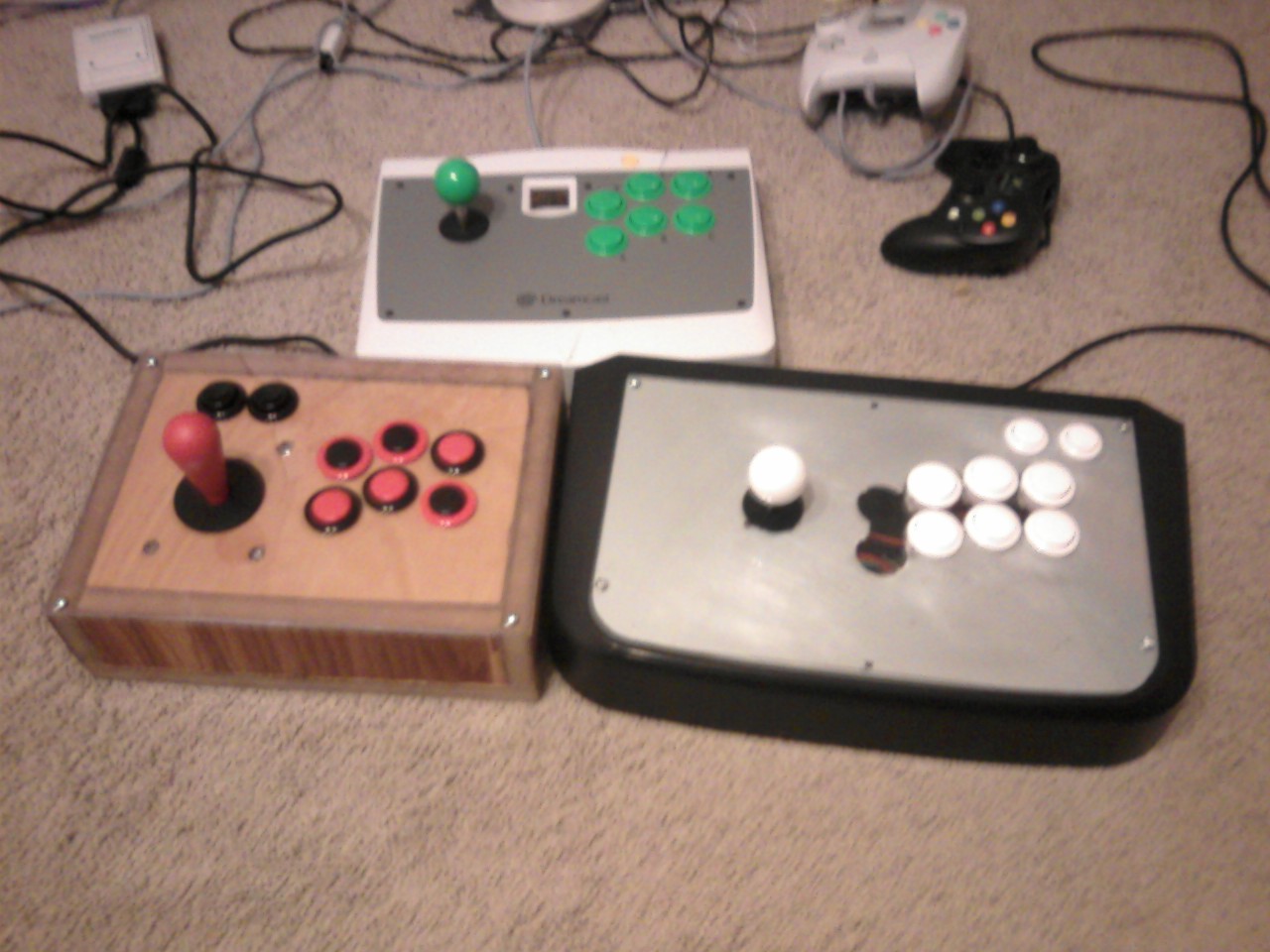
Start with the handle. A ball top gives your fingers a rounded surface; a bat top gives your hand an elongated grip. Try both from your normal playing position. The shape you prefer is personal, and a handle alone cannot identify the mechanism underneath.
Then separate three sensations that often get bundled together:
- Centering force: how strongly the lever resists movement and returns toward the middle.
- Engage distance: how far it moves before a direction registers.
- Throw: how far it can move before reaching its mechanical stop.
A firmer spring does not, by itself, establish a shorter throw or a faster electrical response. Avoid treating “stiffer” and “more precise” as interchangeable. When trying a stick, check whether you can hit directions consistently and release back to neutral comfortably.
There is also no single permanent “Sanwa feel.” Sanwa sells several replacement spring options for the JLF/JLX/JLX2 families. Its JLX2 gate accepts optional inserts that change the guide shape. Those choices can change the experience without changing brands. 52
For a fighting game, compare your usual motions and diagonal inputs. For a four-way game, focus on clean transitions between the four directions. A brand name cannot compensate for the wrong directional setup.
The part has to fit below the panel
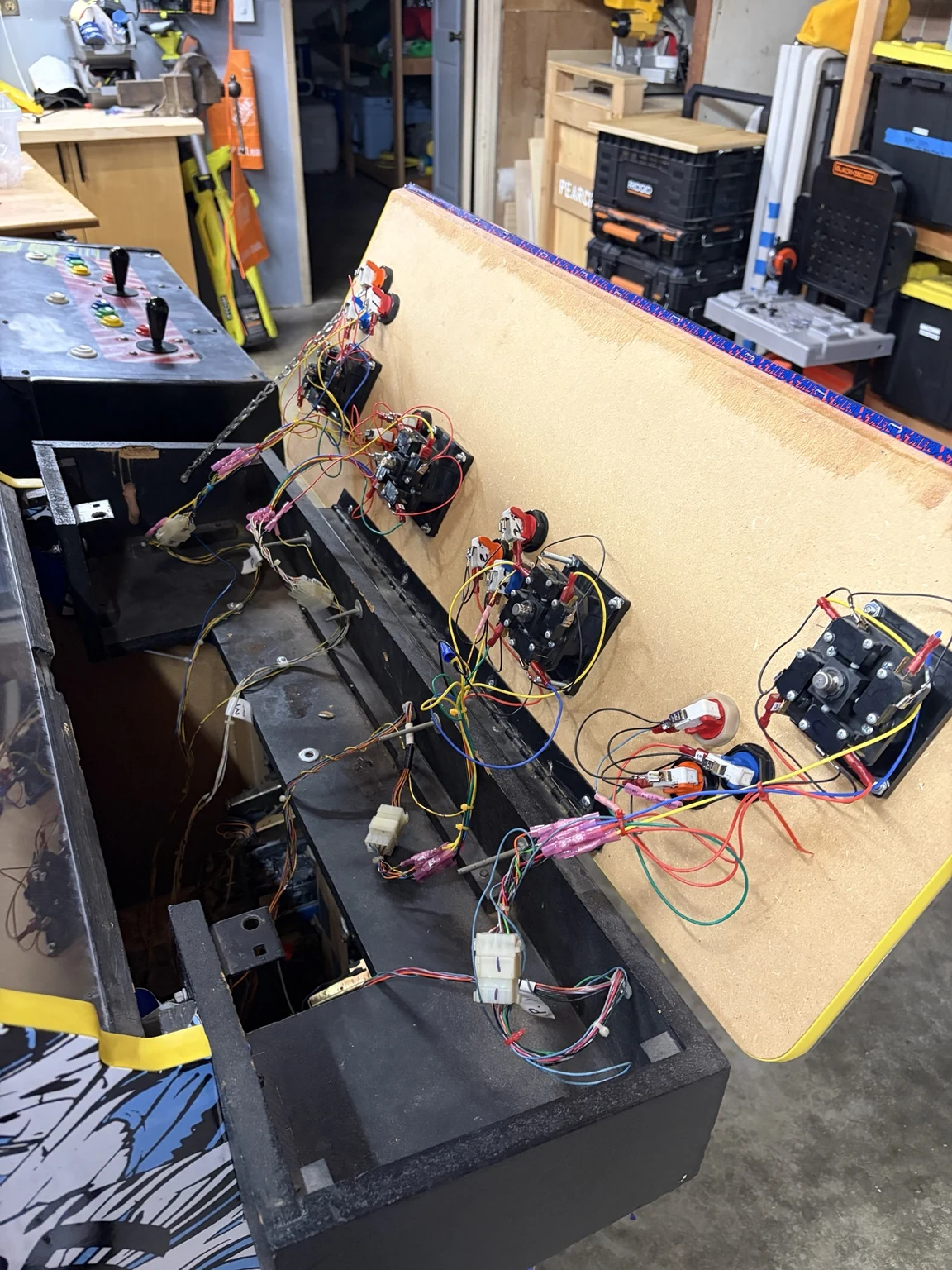
A good joystick can be the wrong purchase if it leaves too little shaft above the panel or collides with something underneath. Measure before ordering: mounting holes, panel thickness, usable shaft height, clearance below, and room for the connectors.
Sanwa lists an 85 × 40 mm mounting size for the JLX2-TP-8YT. SUZOHAPP describes its Competition as suitable for wood and metal panels. Neither statement makes the two bolt patterns interchangeable. Compare the manufacturer’s drawing with your actual panel. 23
Connector style matters, too
The Sanwa PCB-type assembly uses a connector. The Competition’s standard microswitches use individual 0.187-inch terminals. Plan the appropriate harness or connections for the exact joystick and input board; similar-looking plugs do not guarantee the same pinout. 23
For repair parts, record the complete model number before buying a switch, spring, actuator, or gate. Photograph the existing connections before removing anything. Switch off and unplug the cabinet before working on the controls, and stay clear of the CRT and power-supply area.
Which would I choose?
For an original cabinet: start with its manual, original mounting, and intended control type. Repairing the existing assembly may preserve the feel you were trying to recover. Do not drill new holes simply because an online discussion declares a different brand the winner.
For a tabletop or fightstick-style build: I would put a genuine Sanwa JLF/JLX-family lever on the shortlist, particularly if changing gates and springs appeals to you. Choose the exact model early enough to design the panel and wiring around it.
For a full-size build with a bat handle: I would compare the SUZOHAPP Competition’s dimensions and eight-way configuration with the design. If four-way operation is necessary, compare a model that explicitly supports it, such as the Super, rather than assuming the Competition converts.
For a two-player build, plan both positions together. Check clearance and hand space for each player, and use matching configurations if you want both sides to feel consistent.
Two DIY alternatives to look at
The links below are EG STARTS products. They are alternatives in familiar arcade-control styles, not genuine Sanwa or SUZOHAPP models. This article does not include a hands-on test of either.
EG STARTS American-style joystick
An elliptical-handle option listed with individual 4.8 mm terminals. Confirm the mounting measurements, directional operation, and encoder connections on the current listing before ordering.
View the EG STARTS American-style joystick on Amazon (affiliate link)
EG STARTS five-pin ball-top joystick
A ball-top option whose listing describes four-way/eight-way configuration and a five-pin cable. Check the supplied gate, cable pinout, dimensions, and included parts against your build.
View the EG STARTS five-pin joystick on Amazon (affiliate link)
The right purchase is the one that fits your machine and gives you the control you want. Choose the game and the physical setup first, then choose the part.
Keep playing the classics.
Sources & photo notes
Manufacturer specifications and product identities checked October 3, 2026. Recommendations are editorial judgments based on those specifications, not comparative test results. Owner photos show mounting and access; they do not identify the installed lever models.
- Sanwa Denshi: joystick families and product history.
- Sanwa: JLX2-TP-8YT — connector, GT-8X gate, optional guide inserts, mounting size, and separately sold ball top.
- SUZOHAPP: 8-Way Competition, 50-6070-120 — panel types, terminals, and eight-way-only operation.
- SUZOHAPP catalog — Super 50-6084-000 listed as four-way and eight-way.
- Sanwa: JLF/JLX/JLX2 replacement springs.
Controller reference photo: aznchristmas, Wikimedia Commons, used unaltered under CC BY-SA 3.0. Cabinet photographs: Matt Pearce.

A closer look at the controls
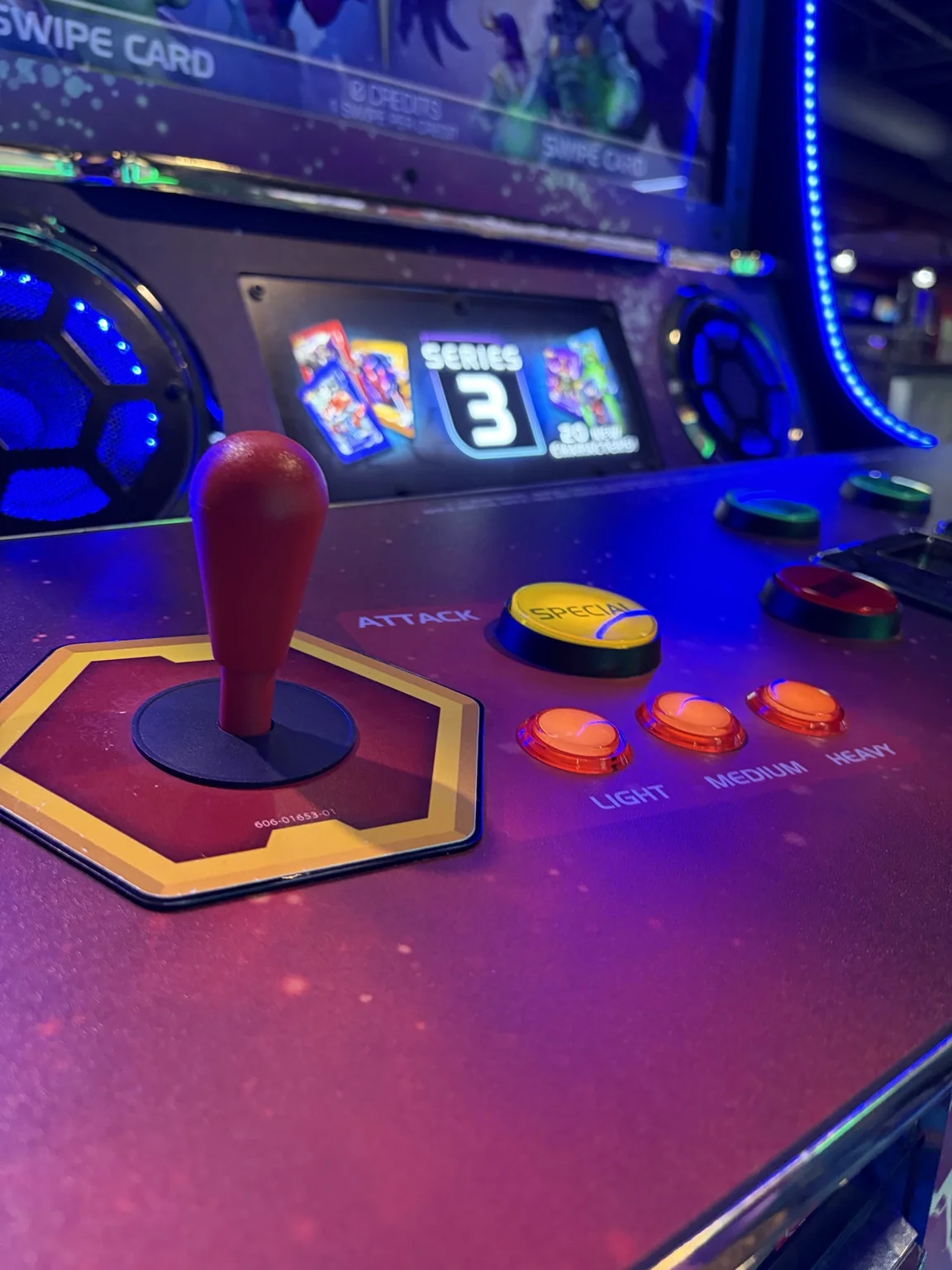
A ball-top handle and button layout show how a panel feels to the player. Check the hardware below the panel to identify the joystick manufacturer and model.